
Medically reviewed by Barbra Scheirer, Psychiatric Mental Health Nurse Practitioner at Mighty Mental Health
Last medically reviewed: August 25, 2026
Las Vegas residents can find depression help through psychiatry clinics, therapists, primary care providers, and telehealth services offering therapy, medication, or both.
If depression is affecting sleep, energy, relationships, work, or your ability to enjoy life, finding support can feel like another difficult task. People searching for where to get help for depression in Las Vegas have several options, including private psychiatry practices, therapy offices, community services, and virtual care.
The right choice depends on what you need. Some people primarily need psychotherapy. Others may benefit from medication management, while some need both. NIMH notes that depression treatment commonly involves psychotherapy, medication, or a combination, with treatment tailored to individual needs and medical circumstances.
Start with the type of care you need
A therapist, psychologist, psychiatrist, psychiatric nurse practitioner, or primary care provider may be an appropriate starting point. Primary care can provide an initial screening and referral when specialized care is needed. If symptoms are persistent or interfering with daily life, professional evaluation is preferable to managing depression alone.
Knowing Depression and Why Getting Help Matters
Depression is more than having a bad week. It can involve persistent low mood or loss of interest along with changes in sleep, appetite, energy, concentration, self-worth, or daily functioning. Some people mainly notice irritability, fatigue, physical complaints, or withdrawal rather than sadness.
Depression can look different from person to person
Someone may continue working while privately struggling to get through the day. Another person may stop socializing, neglect responsibilities, or find familiar activities exhausting. Symptoms can also overlap with anxiety, trauma, substance use, bipolar disorder, medication effects, or medical conditions, making professional assessment important.
Depression is treatable. NIMH identifies psychotherapy, medication, or both as common treatments. Other interventions may be considered when standard approaches do not provide enough improvement.
Getting help earlier can make treatment planning easier. You do not have to wait until symptoms become unbearable before contacting a provider.

What to Look for in a Depression Treatment Provider
Choosing a provider involves more than finding the clinic with the highest rating or earliest appointment. Look for a qualified professional who regularly evaluates and treats depression and explains treatment recommendations clearly.
Questions worth asking
Ask whether the provider offers medication management, psychotherapy, or coordination between the two. Also ask which insurance plans are accepted, whether telehealth is available, how follow-up visits work, and what happens if the first treatment is not effective.
A good provider should review symptoms, medical history, current medications, previous psychiatric treatment, and relevant family history. NIMH emphasizes that treatment selection should reflect individual needs, preferences, and medical circumstances.
Convenience matters, too. Location, scheduling, communication, cost, and insurance coverage can influence whether care remains consistent.
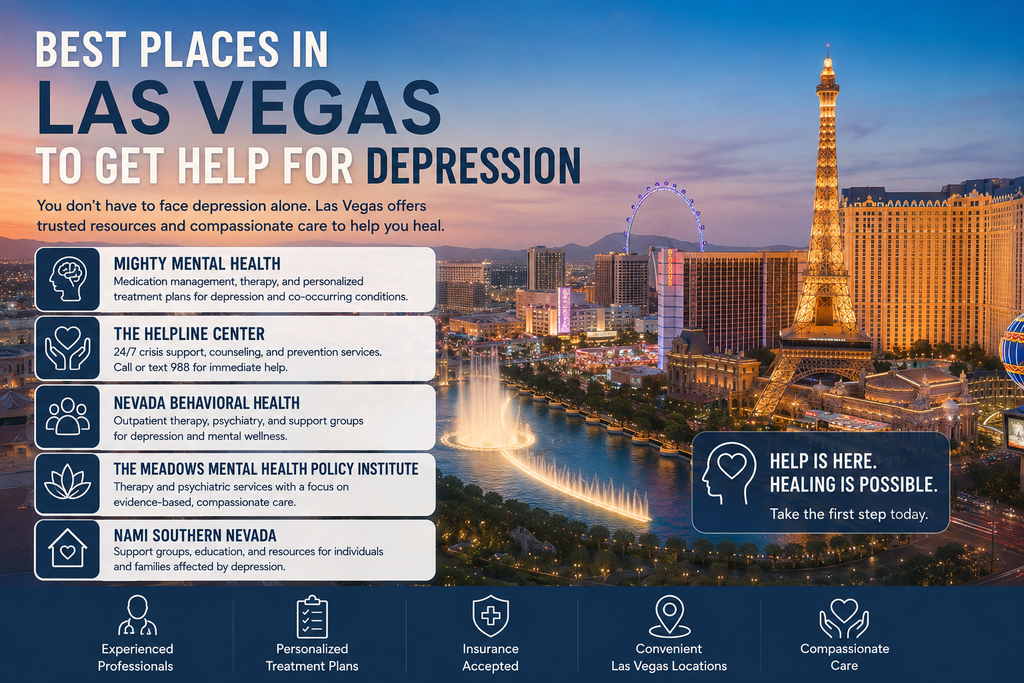
Top Places in Las Vegas for Depression Treatment
Las Vegas has a broad mental health care landscape, so “best” is best understood as the place that fits your clinical needs, insurance, preferences, and level of support required.
Private psychiatry and medication management offices
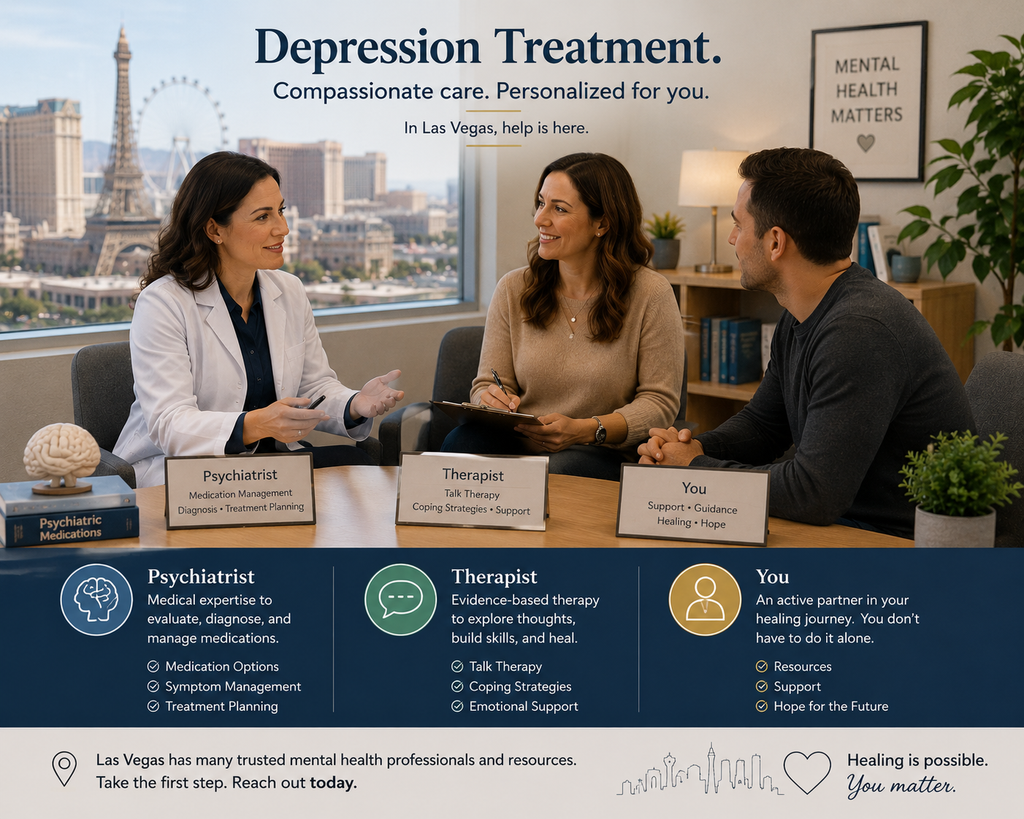
Psychiatry practices and psychiatric providers can evaluate depression and provide medication management when clinically appropriate. Examples of Las Vegas providers offering psychiatric or mental health services include Mighty Mental Health, Changing Minds Psychiatry, Nevada Mental Health, Desert Psychiatry, and Serenity Mental Health Centers – Las Vegas. Services, insurance participation, availability, and treatment approaches can change, so confirm current details directly with each provider.
Therapy and counseling practices
Therapists and other licensed mental health professionals can provide psychotherapy without medication management. Evidence-based approaches such as cognitive behavioral therapy can help people identify unhelpful thinking patterns and develop healthier coping and behavioral strategies. NIMH notes that psychotherapy can be provided in person or virtually.
For someone with mild or moderate depression, therapy may be an important first step. For more significant symptoms, therapy may be combined with medication or another level of care.
Community and higher-acuity services
Community mental health organizations and behavioral health facilities can be important when someone needs broader services, has limited resources, or requires more intensive support. A primary care provider can also help connect someone with appropriate mental health services.
If depression includes thoughts of suicide or immediate danger, routine outpatient scheduling is not the right level of care. Call or text 988 for the Suicide & Crisis Lifeline, or call 911 in a life-threatening emergency.
In-Person vs. Telehealth: Which Is Right for You?
Both formats can be useful. In-person visits may feel more comfortable for people who prefer face-to-face interaction or a traditional office setting.
Why some people choose telehealth
Telehealth can remove transportation barriers, reduce time away from work, and make appointments easier to fit into a busy schedule. NIMH recognizes psychotherapy delivered virtually as an available treatment format.
Telehealth is not automatically better or worse. The right choice depends on symptoms, preferences, privacy at home, technology access, and the services your provider can deliver remotely.
What Depression Treatment Typically Involves
Treatment usually begins with an evaluation rather than an automatic prescription. The provider will want to understand what you have experienced, how long symptoms have been present, how they affect daily life, and whether another condition could be contributing.
Therapy
Psychotherapy can address thought patterns, behaviors, relationships, stress, and coping skills. CBT is one commonly used evidence-based approach. Therapy may be used alone or alongside medication.
Medication
Antidepressants are commonly prescribed for depression. They generally take time to work; NIMH notes that antidepressants often require about four to eight weeks for their effects to become apparent. A provider may monitor symptoms and side effects and adjust treatment when needed.
Ongoing follow-up
Depression treatment is rarely a one-visit decision. Follow-up helps determine whether symptoms are improving, side effects are manageable, and the plan needs to change. Finding the most effective approach can involve some trial and error.
How Mighty Mental Health Supports Depression Treatment in Las Vegas
For people searching for where to get help for depression in Las Vegas, Mighty Mental Health provides psychiatric and medication management care in Las Vegas and Summerlin, Nevada. The practice offers telehealth visits and in-office consultations.
Mighty Mental Health develops individualized treatment plans. Depending on the evaluation and clinical needs, care may include prescribing medication, recommending therapy, or combining approaches as part of a well-rounded plan. Care is provided through Psychiatric Mental Health Nurse Practitioner Barbra Scheirer.
Mighty Mental Health accepts Nevada Medicaid, CareSource, Silver Summit, Health Plan of Nevada, Molina, and Anthem. Benefits and eligibility can vary, so confirm coverage and appointment details with the office.
If depression is making everyday life harder, you do not need to figure out treatment options alone. Contact Mighty Mental Health at 702-479-1600 or use the practice’s contact form to request an appointment.
Frequently Asked Questions
Is medication or therapy better for depression?
Neither is automatically better for everyone. NIMH states that depression may be treated with psychotherapy, medication, or both. The best approach depends on symptom severity, medical history, preferences, and previous treatment response. Some people benefit from therapy alone, while others benefit from combining therapy and medication.
How much does depression treatment cost in Las Vegas?
There is no single price. Costs vary by provider, appointment type, insurance plan, deductible, copay, and whether the service is therapy, psychiatric evaluation, or medication management. Ask about self-pay rates and insurance coverage before scheduling.
Does insurance cover depression treatment?
Many health plans cover some forms of mental health treatment, but benefits vary. Coverage may depend on the provider, service, diagnosis, network status, and plan requirements. If you have Nevada Medicaid, CareSource, Silver Summit, Health Plan of Nevada, Molina, or Anthem, contact the provider to confirm current participation and benefits.
How soon can I get an appointment for depression treatment?
Availability varies and can change quickly. Ask about the earliest new-patient appointment, cancellation openings, telehealth availability, and insurance acceptance. If symptoms are urgent or include thoughts of suicide, do not wait for a routine appointment; seek crisis or emergency support.
References
- National Institute of Mental Health. Depression. Information on psychotherapy, medication, treatment-resistant depression, and brain stimulation therapy.
- National Institute of Mental Health. Psychotherapies. Information on evidence-based psychotherapy and finding a mental health professional.
- National Institute of Mental Health. Help for Mental Illnesses. Guidance on finding mental health treatment and providers.