

Medically reviewed by Barbra Scheirer,
Psychiatric Mental Health Nurse Practitioner at Mighty Mental Health
Last medically reviewed: October 19, 2026
Psychiatric care in Las Vegas for anxiety and depression includes an accurate diagnosis, medication management, therapy referrals, and ongoing support, in person or by telehealth.
Anxiety and depression are not just bad moods or rough weeks. They are medical conditions that change how you think, feel, sleep, and function, and they can make work, relationships, and ordinary routines feel much harder than they should. The good news is that both are common, both are treatable, and help is close by.
If you are searching for a psychiatrist for anxiety and depression in Las Vegas, this guide walks through what each condition looks like, how it is diagnosed, what treatment involves, and what to expect from your first appointment, whether you are in Las Vegas, Summerlin, or Henderson.
Understanding Anxiety and Depression
What Is Anxiety?
Anxiety is a feeling of fear, worry, or unease. A little of it is normal, especially before a big decision or during a stressful stretch. An anxiety disorder is different. The worry is excessive, hard to control, and it keeps showing up even when there is little reason for it.
Common types include:
- Generalized anxiety disorder (GAD): ongoing worry about everyday matters such as money, health, work, or family
- Panic disorder: sudden episodes of intense fear with a racing heart, shortness of breath, or dizziness
- Social anxiety disorder: strong fear of being judged or embarrassed in social situations
- Phobias: intense fear of a specific object or situation
- Post-traumatic stress disorder (PTSD): anxiety that follows a traumatic event
Symptoms show up in three ways. Emotionally, you may feel restless, irritable, or constantly on edge. Physically, you may notice a rapid heartbeat, sweating, muscle tension, headaches, stomach trouble, or poor sleep. Behaviorally, many people start avoiding situations that trigger the worry, or put tasks off until the last minute.
What Is Depression?
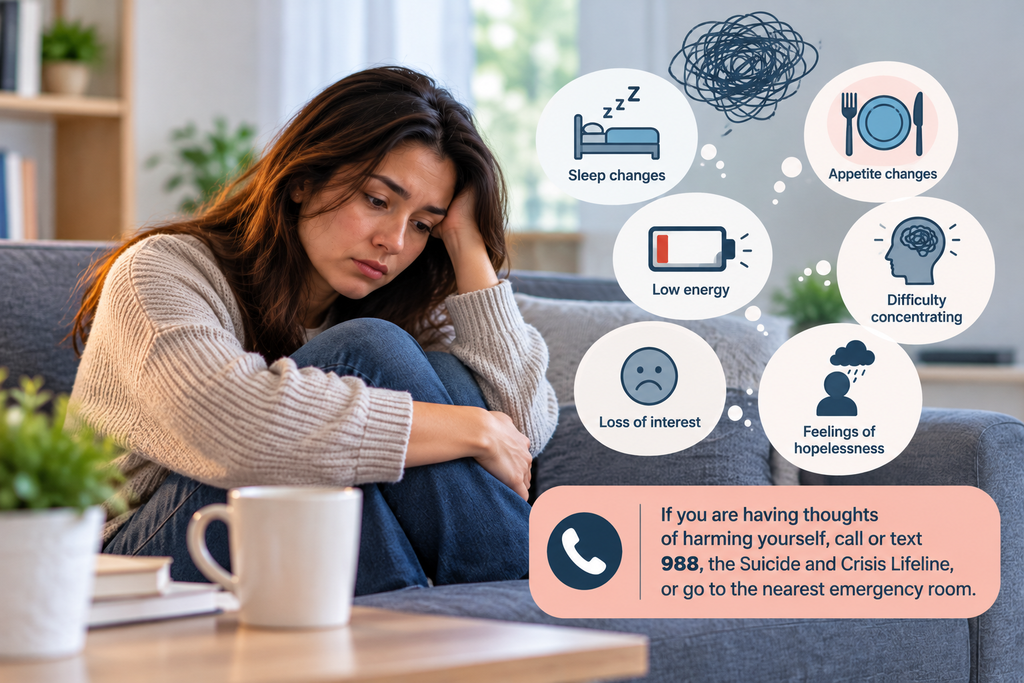
Depression, also called major depressive disorder, goes beyond sadness. It involves a persistent low or empty mood or a loss of interest in activities you once enjoyed, along with changes in sleep, appetite, energy, and concentration. Many people also feel worthless, guilty, or hopeless.
Depression can affect anyone, regardless of age, background, or circumstances. It often has no single obvious cause, and it rarely lifts on its own just because life calms down, which is why early depression treatment matters.
If you are having thoughts of harming yourself, call or text 988, the Suicide and Crisis Lifeline, or go to the nearest emergency room.
Why Anxiety and Depression Often Occur Together
Many people live with both at once, which clinicians call comorbidity. Chronic worry can wear you down until you feel flat and hopeless. Depression can make everyday demands feel threatening, which feeds anxiety. Each can also hide the other, which is one reason self-diagnosis is unreliable and a full evaluation matters.
What Raises the Risk?
No single factor causes either condition, and the causes of anxiety and depression often overlap. Common contributors include family history, trauma or major life changes, long-term stress, poor sleep, substance use, and certain medical conditions. In a city built around late hours, shift work, and a 24-hour economy, irregular schedules and disrupted sleep can add real strain on top of these.
When Should You See a Psychiatric Provider?
Many people wait far longer than they need to. Consider making an appointment if:
- Worry, fear, or low mood is persistent and hard to manage on your own
- Your work, sleep, relationships, or daily routine are suffering
- Coping strategies you have tried have not helped
- You are wondering whether medication could be part of your care
- Anxiety and depression are showing up together, or alongside ADHD, sleep problems, or substance use
Reaching out is not a sign of weakness. It is a practical step, and the earlier you take it, the sooner treatment can start working.
How Anxiety and Depression Are Diagnosed
A proper diagnosis is the foundation of effective treatment, and it takes more than a checklist. A thorough evaluation typically includes:
- A clinical interview covering your symptoms, how long they have lasted, your history, and how they affect daily life
- Standardized screening tools, such as the GAD-7 for anxiety and the PHQ-9 for depression, to measure severity and track progress over time
- A medical review, since thyroid problems, heart conditions, medication side effects, and other issues can mimic or worsen symptoms
- A look at overlap with other conditions, including depression, ADHD, and sleep disorders
For generalized anxiety disorder specifically, diagnosis generally requires excessive worry on more days than not for at least six months, along with difficulty controlling it. Adults also have at least three of these symptoms: fatigue, sleep problems, irritability, restlessness, muscle tension, or trouble concentrating. For depression, symptoms such as low mood or loss of interest typically need to be present for at least two weeks.
What a Psychiatric Provider Does
A psychiatrist is a medical doctor who specializes in mental health. Psychiatric mental health nurse practitioners (PMHNPs) are advanced practice nurses with specialized training who also evaluate, diagnose, and treat mental health conditions, including prescribing medication. At Mighty Mental Health, care is provided by Barbra Scheirer, a Psychiatric Mental Health Nurse Practitioner.
Because they take a medical approach, psychiatric providers look at the whole picture: your symptoms, your physical health, your medications, and your life circumstances. Their role typically includes:
- A comprehensive mental health evaluation and accurate diagnosis
- A personalized treatment plan built around your goals
- Medication management, including choosing a medication, adjusting the dose, and monitoring side effects
- Referrals and coordination with therapists for talk-based treatment
- Lifestyle guidance on sleep, exercise, and stress
- Regular follow-up visits so your plan changes as your needs change
Their job is not just to write prescriptions. It is to stay with you through the process and adjust course when something is not working.

Treatment Options for Anxiety and Depression
Treatment is personalized, and it usually combines more than one approach. Therapy, medication, and lifestyle changes work best together for many people.
Therapy
Therapy is a core part of treatment for both conditions. Common approaches include:
- Cognitive behavioral therapy (CBT): helps you spot unhelpful thought patterns and replace them with healthier ones. It is among the best-studied treatments for both anxiety and depression.
- Exposure therapy: gradually and safely confronts feared situations to reduce avoidance
- Mindfulness-based therapy: builds relaxation and present-moment awareness
- Acceptance and commitment therapy (ACT) and dialectical behavior therapy (DBT): teach skills for living with difficult thoughts and emotions
Medication Management
Medication can make a real difference, especially for moderate to severe symptoms. Common options include:
- SSRIs and SNRIs, often the first choice for both anxiety and depression
- Buspirone, a non-sedating option for ongoing anxiety
- Benzodiazepines, used cautiously and short term for acute symptoms
Medication is always individualized. Many people need several weeks to feel the full effect, so follow-up visits matter. Do not stop a medication suddenly without talking to your provider.
Lifestyle and Complementary Support
Daily habits will not replace treatment, but they strengthen it:
- Exercise: regular movement helps lower stress and lift mood
- Sleep: a consistent schedule improves emotional resilience
- Mindfulness and breathing: meditation, yoga, and slow breathing can calm the nervous system
- Nutrition: cutting back on caffeine, alcohol, and other stimulants can ease symptoms
- Support: friends, family, and support groups improve outcomes
What to Expect at Your First Appointment
Walking into a first visit can feel intimidating, so it helps to know what happens. Expect an open conversation about:
- Your current symptoms and how long you have had them
- Your personal and family mental health history
- Your medical history and current medications
- Sleep, appetite, stress, and substance use
- What you hope treatment will change
Your provider may complete screening questionnaires, explain possible diagnoses, and walk through treatment options, including benefits and side effects. You are encouraged to ask questions. Some people start medication at the first visit, others begin with a therapy referral, and many do a bit of both.

Telehealth and In-Office Care in Las Vegas, Summerlin, and Henderson
You do not have to choose between convenience and quality. Many Las Vegas area practices offer both in-person and telehealth appointments. Telehealth is private and flexible, and it can be especially helpful if you have a demanding schedule, limited transportation, or find leaving the house difficult because of anxiety. Prefer face-to-face care? In-office visits are available too. Your provider can help you decide which fits best.
Get Help for Anxiety and Depression in Las Vegas
Mighty Mental Health is a psychiatry and medication management office serving Las Vegas, Summerlin, and Henderson, NV, with telehealth visits and in-office consultations. Our comprehensive treatment plans for anxiety and depression may include prescribing medication or recommending therapy as part of a well-rounded approach to care, overseen by Psychiatric Mental Health Nurse Practitioner Barbra Scheirer.
We accept Nevada Medicaid, CareSource, Silver Summit, Health Plan of Nevada, Molina, and Anthem. Review our accepted insurance plans before booking. Beyond anxiety and depression, we also provide ADHD testing and treatment, support for addiction recovery, help with eating disorders such as bulimia nervosa, and care for a wide range of other mental health concerns.
If you are ready to feel better, function better, and live better, contact us today at 702-479-1600 or through our contact form to schedule your visit.

Frequently Asked Questions
Can one provider treat anxiety and depression at the same time?
Yes. The two conditions are often diagnosed together, and a psychiatric provider is trained to recognize overlapping symptoms and build a single plan that addresses both. This usually means coordinating medication, therapy, and lifestyle support rather than treating each condition in isolation.
What should I expect at my first psychiatric appointment?
Expect a detailed conversation about your symptoms, mental and physical health history, current medications, sleep, stress, and goals. Your provider may use screening questionnaires, then explain possible diagnoses and treatment options. You will leave with a clear next step, whether that is starting medication, being referred to therapy, or both.
Should I see a psychiatric provider or just a therapist?
A therapist focuses on talk-based treatment. A psychiatric provider adds a full medical evaluation, can diagnose and prescribe medication, and can coordinate therapy. If symptoms are persistent, severe, affecting daily life, or have not improved with other strategies, a psychiatric evaluation is a sensible place to start. Many people work with both.
Can I get treatment through telehealth in Las Vegas or Henderson?
Yes. Mighty Mental Health offers telehealth visits as well as in-office consultations for patients in Las Vegas, Summerlin, and Henderson. Telehealth allows you to meet with your provider from home, and your provider can help you choose the format that works best for you.
References
- National Institute of Mental Health. Anxiety Disorders. https://www.nimh.nih.gov/health/topics/anxiety-disorders
- National Institute of Mental Health. Depression. https://www.nimh.nih.gov/health/topics/depression
- American Psychiatric Association. Diagnostic and Statistical Manual of Mental Disorders, Fifth Edition, Text Revision (DSM-5-TR). 2022.
- Mayo Clinic. Generalized anxiety disorder: Symptoms and causes. https://www.mayoclinic.org/diseases-conditions/generalized-anxiety-disorder/symptoms-causes/syc-20360803
- Mayo Clinic. Generalized anxiety disorder: Diagnosis and treatment. https://www.mayoclinic.org/diseases-conditions/generalized-anxiety-disorder/diagnosis-treatment/drc-20361045