

Medically reviewed by: Barbra Scheirer,
Psychiatric Mental Health Nurse Practitioner at Mighty Mental Health
Last medically reviewed: [September 29, 2026]
Yes, a psychiatrist can prescribe medication, often at your first visit, after reviewing your symptoms and history. Controlled drugs and opioids get extra caution.
If you are thinking about seeing a psychiatrist, one of the first questions is usually practical: will I actually leave with a prescription? Others wonder whether a psychiatrist can help with something like chronic pain, or how a nurse practitioner fits in. The short answer is that psychiatric providers can prescribe, but what they prescribe, and when, depends on your diagnosis, health history and safety. This guide pulls together what to expect on your first visit, which medications psychiatric providers commonly prescribe, and where the limits are.
Can a Psychiatrist Prescribe Medication?
Yes, and It Is a Core Part of the Job
Psychiatrists are medical doctors (an M.D. or D.O.) who complete residency training in psychiatry. That medical training lets them diagnose mental health conditions, prescribe and adjust medication, order lab tests, and watch for side effects. It also helps them spot medical conditions that can look like or worsen mental health symptoms, such as thyroid problems, hormonal changes or chronic illness.
Psychiatrist vs. Psychologist
The two titles are often mixed up. Psychologists usually hold a doctoral degree (Ph.D. or Psy.D.) and specialize in psychotherapy and psychological testing. In most states they cannot prescribe medication, though a small number of states allow it with extra training and certification. Many people see both: a psychiatric provider manages medication while a therapist builds coping skills alongside.
Can a Psychiatrist Prescribe Medication on the First Visit?
Often yes, but not automatically. Whether you leave with a prescription depends on how severe your symptoms are, what the diagnosis looks like, and what you have tried before.
What Happens at a First Appointment
An initial evaluation commonly runs 45 to 90 minutes, though this varies by practice. Expect your provider to:
- Review your medical and psychiatric history
- Ask about current symptoms, sleep, mood, stress and relationships
- Discuss past treatments and medications
- Assess mood, thinking and emotional well-being
- Decide whether labs or additional assessments are needed
When Medication May Start Right Away
If symptoms are severe, such as major depression with suicidal thoughts, panic that disrupts daily life, or symptoms of psychosis, a provider may begin medication promptly to stabilize things while other care is arranged.
When a Provider May Wait
With milder symptoms, your provider may suggest therapy and lifestyle changes first. They may also hold off if they need lab results, want to rule out a medical cause, or need more time to be confident in the diagnosis. Neither approach means you were not taken seriously. If medication is started, expect an explanation of how to take it, what side effects to watch for, and a follow-up visit to check how it is working.
What Medications Can a Psychiatrist Prescribe?
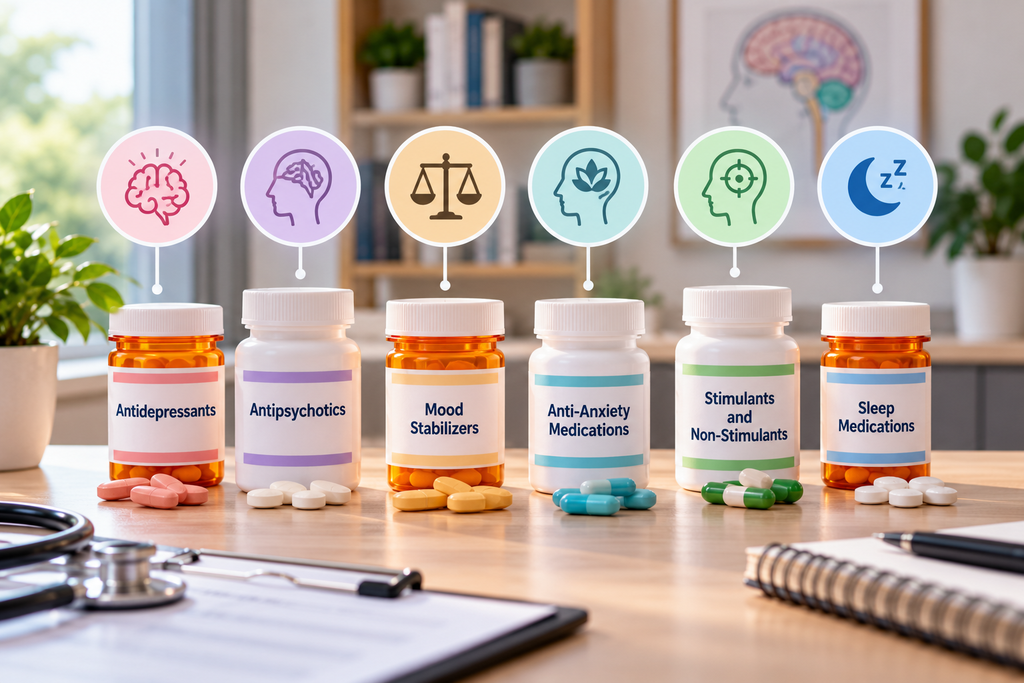
Psychiatric providers prescribe across several categories, each matched to a specific purpose:
- Antidepressants (such as SSRIs and SNRIs) for depression, anxiety disorders and some trauma-related conditions
- Antipsychotics for schizophrenia, bipolar disorder and severe mood disturbances
- Mood stabilizers to even out the highs and lows of mood disorders
- Anti-anxiety medications for excessive worry or panic
- Stimulants and non-stimulants for ADHD
- Sleep medications for insomnia linked to mental health conditions
Controlled Substances
Yes, psychiatric providers can prescribe controlled substances, such as stimulants for ADHD or benzodiazepines for severe anxiety. Because of the potential for dependence, these come with stricter rules, regular follow-ups and a careful discussion of risks and benefits. If a lower-risk alternative fits your condition, your provider may try that first.
Can a Psychiatric Nurse Practitioner Prescribe Medication?
Generally, yes. A psychiatric mental health nurse practitioner (PMHNP) has advanced training in diagnosing and treating mental health conditions and is licensed to prescribe in most states. Prescribing authority, especially for controlled substances, depends on state rules and the provider’s registrations, so it is reasonable to ask any provider what they can prescribe. At Mighty Mental Health, our Psychiatric Nurse Practitioner, Barbra Scheirer, evaluates symptoms, prescribes medication when appropriate, and recommends therapy as part of a well-rounded plan.
Can a Psychiatrist Prescribe Pain Medication?
This is where older advice often contradicts itself, so here is the clear version. A licensed medical prescriber can legally prescribe pain medication, but psychiatry is not where most people should start for pain. Psychiatric providers focus on mental health, and pain management usually belongs with a primary care doctor or pain specialist.
When Pain and Mental Health Overlap
Pain and mental health are closely linked. People living with fibromyalgia, arthritis, migraines or nerve pain are more likely to develop depression or anxiety, and long-term stress or trauma can make the body more sensitive to pain signals. A psychiatric provider can get involved when pain is tied to a mental health condition, when pain stands in the way of therapy, or when care is shared with other specialists.
Non-Opioid Options They May Use
In these situations, providers tend to choose medications that help both mood and pain:
- Duloxetine or venlafaxine: SNRIs that can help depression, anxiety and certain types of nerve pain
- Amitriptyline or nortriptyline: older antidepressants sometimes used for chronic nerve pain
- Gabapentin or pregabalin: anticonvulsants used for nerve-related pain, with pregabalin classed as a controlled substance
Therapies like cognitive behavioral therapy (CBT) and acceptance and commitment therapy (ACT) can also reduce pain intensity and improve coping.

What About Opioids?
Psychiatric providers rarely prescribe opioid pain medication. The risk of misuse and dependence usually outweighs the benefit in a psychiatric setting, so they generally leave opioids to specialists working in a coordinated team.
When Should You See a Psychiatric Provider for Medication?
Therapy helps many people, but medication can speed recovery or address symptoms therapy alone cannot fully reach. Consider an evaluation if you notice:
- Sadness or hopelessness that does not lift with time or counseling
- Severe anxiety or panic attacks that interfere with daily life
- Sudden or extreme mood changes, such as irritability, anger or euphoria
- Trouble sleeping or eating that affects how you function
- Difficulty concentrating or loss of interest in things you used to enjoy
- Pain that seems tied to stress, trauma or low mood
If you are having thoughts of harming yourself, call or text 988 right away.
Get Psychiatric Care in Las Vegas and Summerlin
Mighty Mental Health is a psychiatry and medication management office in Las Vegas and Summerlin, NV, offering telehealth visits and in-office consultations. Our providers accept Nevada Medicaid, CareSource, Silver Summit, Health Plan of Nevada, Molina and Anthem, and we offer comprehensive care treatment plans that may include prescribing medication, recommending therapy, or both. Contact us today at 702-479-1600 or through our contact form to schedule your first appointment.

Frequently Asked Questions
Can psychiatrists prescribe medication for anxiety or depression?
Yes. Psychiatric providers diagnose these conditions and prescribe medications such as antidepressants or anti-anxiety drugs, then provide ongoing medication management to make sure treatment stays effective and safe.
Can a psychiatrist prescribe controlled substances?
Yes, including stimulants for ADHD and benzodiazepines for severe anxiety. These are monitored closely, require regular follow-ups, and are prescribed only when medically necessary.
What if I don’t want to take medication?
Your provider can work with you on non-medication options such as CBT, mindfulness-based therapy and lifestyle changes. You can also revisit medication later, and your provider can guide you through that decision.
Do psychiatrists commonly prescribe opioids for pain?
No. Psychiatrists are legally able to, but they rarely do because of the risk of dependence. They more often choose non-opioid medications that also support mood, and they coordinate with a primary care doctor or pain specialist.
References
- National Institute of Mental Health. Mental Health Medications.
- American Psychiatric Association. What Is Psychiatry?
- U.S. Food and Drug Administration. Cymbalta (duloxetine) prescribing information.
- Centers for Disease Control and Prevention. Clinical Practice Guideline for Prescribing Opioids for Pain (2022).
- U.S. Drug Enforcement Administration. Controlled Substance Schedules.