
Medically reviewed by Barbra Scheirer, Psychiatric Mental Health Nurse Practitioner at Mighty Mental Health
Last medically reviewed: October 26, 2026
To schedule a psychiatrist appointment, pick a provider, confirm insurance, book by phone or online, and gather your symptoms, medications, and history before your visit.
Reaching out for psychiatric care is one of the most useful things you can do for your mental health, and it is also one of the hardest to start. Many people put it off because they are not sure where to begin. Do you call, book online, or ask your primary care doctor first? What will it cost? How long will you wait? What do you even say when someone picks up the phone?
This guide answers those questions in order. You will learn what a psychiatrist does and how that differs from other providers, when it makes sense to book, how to schedule an appointment in person or online, how to handle insurance, what to prepare, and what actually happens at your first visit.
What Does a Psychiatrist Do?
A psychiatrist is a medical doctor who specializes in diagnosing and treating mental health conditions. Because of their medical training, psychiatrists can look at how physical health, medications, and mental health affect one another, and they can prescribe medication. Psychiatric mental health nurse practitioners (PMHNPs) are advanced practice nurses who also evaluate, diagnose, and treat mental health conditions, including prescribing medication.
In practice, a psychiatric provider will typically:
- Evaluate your symptoms and give an accurate diagnosis
- Build a personalized treatment plan
- Prescribe and monitor medication when it is appropriate
- Provide therapy or refer you to a therapist for talk-based care
- Follow up regularly and adjust your plan as your needs change
Psychiatrist vs. Psychologist vs. Psychiatric Nurse Practitioner
The titles are easy to mix up, especially psychiatrist and psychologist, and choosing the right one saves time. Here is how the main provider types compare.
| Provider | Training | Prescribing medication? | Typical role |
| Psychiatrist | Medical doctor (MD or DO) with psychiatry training | Yes | Diagnosis, medication management, sometimes therapy |
| Psychiatric nurse practitioner | Advanced practice nurse with psychiatric specialty training | Yes, in most states | Assessment, diagnosis, medication management, therapy |
| Psychologist | Doctoral degree in psychology | No, in most states | Psychological testing, diagnosis, talk therapy |
| Therapist or counselor | Master’s-level training | No | Talk therapy and coping skills |
Many people work with more than one. A psychiatric provider manages medication while a therapist provides regular talk therapy, and the two coordinate your care.

When Should You See a Psychiatrist?
You do not need to be in crisis to book an appointment. Psychiatric care is appropriate for a wide range of concerns, including:
- Anxiety and panic: constant worry, panic attacks, social anxiety, or phobias
- Depression: persistent low mood, hopelessness, or loss of motivation
- Sleep problems: insomnia that stress, anxiety, or depression may be driving
- PTSD: flashbacks, nightmares, or emotional numbness after a traumatic event
- ADHD: trouble focusing, staying organized, or controlling impulses
- OCD: intrusive thoughts and repetitive behaviors
- Addiction: alcohol or drug use that is hard to control, including medication-assisted treatment
- Eating disorders: bulimia nervosa, binge eating disorder, or anorexia nervosa
Signs It May Be Time to Book
Consider scheduling if symptoms last more than a couple of weeks, interfere with work, school, or relationships, or keep getting worse. Other signs include self-help strategies that have stopped working, wondering whether medication could help, or noticing that sleep, appetite, or energy have changed in ways you cannot explain.
Should You Start With Your Primary Care Provider?
Not necessarily, but it is a reasonable option. Primary care providers can screen for common conditions, rule out physical causes such as thyroid problems, and sometimes start treatment for mild to moderate symptoms. They can also refer you to a specialist. If your symptoms are significant, complex, or already affecting your daily life, going straight to a psychiatric provider is often faster.
If you are having thoughts of suicide or self-harm, do not wait for an appointment. Call or text 988, the Suicide and Crisis Lifeline, or go to the nearest emergency room.
How to Schedule an Appointment With a Psychiatrist
Booking is simpler than most people expect. Here is the process from first search to confirmed visit.
Step 1: Research and Choose a Provider
Start by looking for psychiatric providers near you or ones who offer telehealth. Check credentials, areas of focus, and patient reviews. If you have a specific concern such as ADHD, addiction, or an eating disorder, look for a practice that treats it. Also decide early whether you prefer in-office or online visits, since that shapes your options.

Step 2: Check Insurance and Costs
Call your insurance company or use the practice’s insurance page, and ask:
- Are psychiatric visits covered, and is this provider in network?
- What is my copay, and does my deductible apply?
- Does my plan cover telehealth visits?
- Do I need a referral or prior authorization?
Many psychiatric providers accept self-referrals, but some plans, particularly HMOs, require a referral from a primary care provider. Without insurance, a psychiatry visit often costs somewhere between $100 and $500 per session, with the first evaluation usually at the higher end.
If you are uninsured or underinsured, ask the practice about self-pay rates, and look into community mental health centers and sliding-scale clinics. The federal treatment locator at FindTreatment.gov can help you find options near you.
Step 3: Contact the Office or Book Online
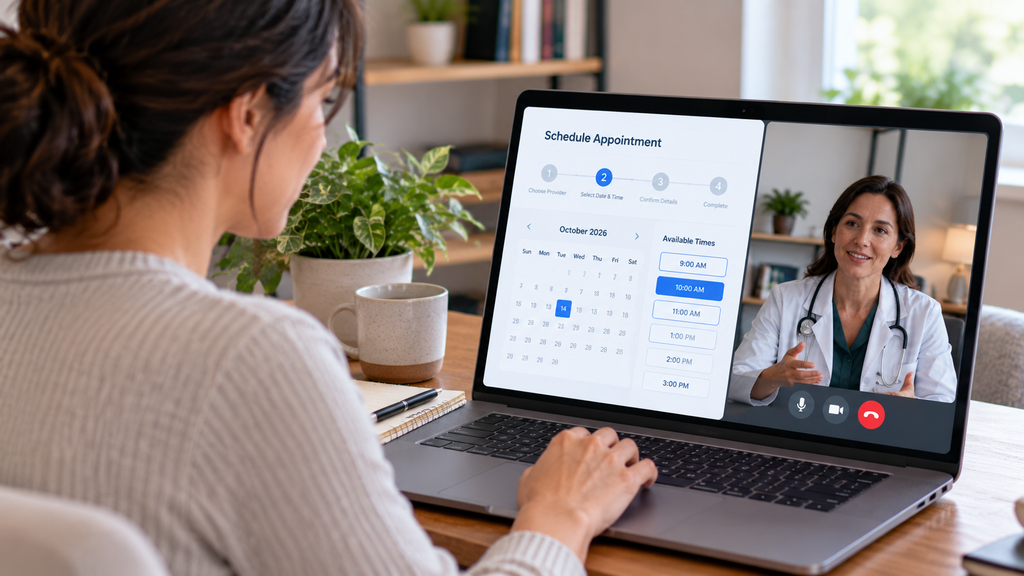
You can call the office or use the online booking button on the provider’s website. Most practices have a clearly marked “Book Appointment” or “Schedule Visit” option that leads to a scheduling page or patient portal.
If you call, you do not need a polished explanation. Something simple works: “I would like to schedule a first appointment with a psychiatric provider. I have been dealing with anxiety and trouble sleeping, and I would like to know if you take my insurance.” Front desk staff handle these calls every day.
Step 4: Choose Your Appointment Type
Practices usually offer several visit types:
- Initial psychiatric evaluation: a longer first visit, often close to an hour
- Follow-up visit: a shorter appointment to track progress and adjust medication
- ADHD testing: a focused evaluation for attention and focus concerns
- Condition-specific care: treatment for depression, addiction, bulimia nervosa, or other concerns
If you are new, choose the initial evaluation.
Step 5: Pick a Date and Time
Online calendars usually show real-time availability. Pick a time you can keep, and note your time zone if the provider is not local. If nothing suits you, ask the office whether a cancellation list exists.
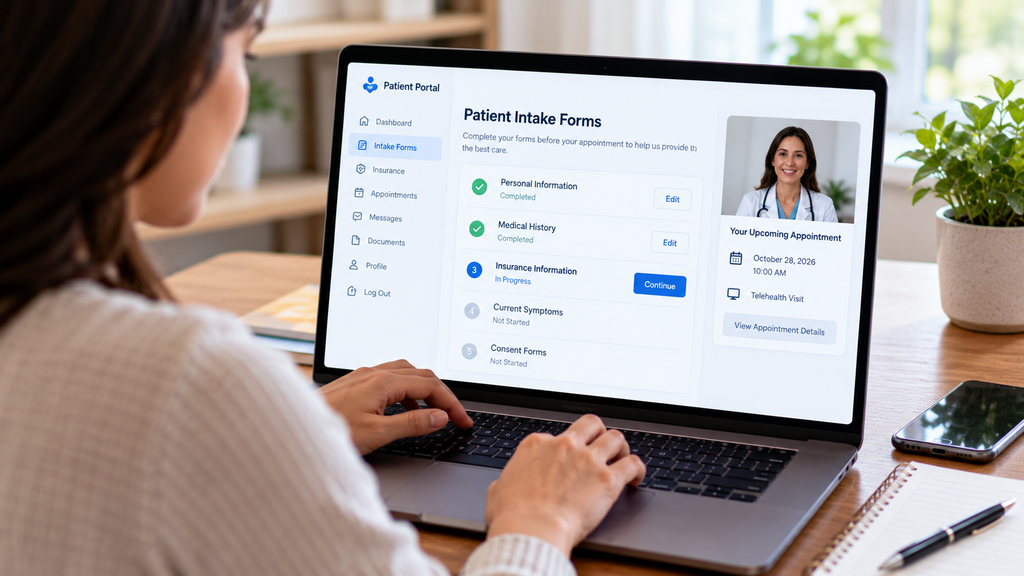
Step 6: Complete Your Intake Forms
After booking, you will usually be asked to create a patient portal account. This is where you complete intake forms, enter insurance details, and manage future appointments. Finishing paperwork early means more of your visit is spent on care, not forms.
How Long Does It Take to Get a Psychiatry Appointment?
Wait times vary a great deal by location and practice. Some offices book out for weeks, while others can see new patients quickly. A few practical ways to shorten the wait:
- Ask to be added to a cancellation list
- Consider telehealth, which can widen your options and sometimes opens earlier slots
- Call more than one practice rather than waiting on a single callback
- Ask whether a nurse practitioner or another provider at the same office has earlier availability
If your situation feels urgent, do not wait for a routine appointment. Use 988, urgent care, or the emergency room for crisis situations.
In-Person vs. Online Psychiatry: Which Should You Choose?
Neither option is better for everyone. Research on telemental health has found it to be comparable to in-person care for many conditions, so the right choice often comes down to your life and preferences.
| Factor | Online (Telehealth) | In-Office |
| Convenience | Attend from home, no travel | Requires travel and waiting room time |
| Privacy | Private, no waiting room | Standard clinic setting |
| Scheduling | Often more flexible, including evenings | Set office hours |
| Personal connection | Video, which many find comfortable | Face-to-face, which some prefer |
| Best for | Busy schedules, limited transportation, anxiety about leaving home | Those who prefer in-person rapport |
Some prescriptions, including certain controlled substances, can carry extra requirements depending on the medication and current regulations. Ask your provider what applies to your situation.
What Information You Need to Book
Having these details ready makes booking quick:
- Full name and date of birth
- Contact information: phone number and email for confirmations and reminders
- Insurance details: plan name, member ID, and group number
- Payment method: for copays or self-pay visits
- Reason for the visit: a short description of what you are struggling with
- Medical history: past diagnoses, treatments, and current medications
Some practices also ask for a photo ID or digitally signed consent forms.
How to Prepare for Your Psychiatry Appointment
A little preparation helps you get far more out of a limited appointment.
Before the Visit
- Write down your symptoms: when they started, how often they occur, and what makes them better or worse
- List every medication and supplement you take, including over-the-counter products
- Note your family mental health history, since it can inform diagnosis and treatment
- Prepare questions, such as treatment options, side effects, and how often you will need follow-ups
- Think about stressors or recent life changes that may be affecting you
- Consider bringing a trusted friend or family member for support and to help you remember what was said
For an Online Visit
Test your device, camera, and internet connection ahead of time. Choose a quiet, private space, and log in five to ten minutes early. Providers typically use a secure video platform and will send a link or login instructions.

What Happens at Your First Psychiatry Appointment
Your first visit is a conversation, not a test, and there are no wrong answers. Most evaluations follow a similar flow.
What You Will Be Asked
Expect questions about your current symptoms and how long you have had them, your sleep, appetite, and energy, your personal and family mental health history, any medications you take, and substance use. You may also be asked about stress at work or home and what you hope treatment will change.
Screening and Assessment
Many providers use short, standardized questionnaires such as the PHQ-9 for depression or the GAD-7 for anxiety to measure severity and track progress over time. Depending on your symptoms, your provider may also recommend lab work to rule out physical causes.
Treatment Decisions
By the end of the visit, you should have a clear picture of what your provider thinks is going on and what options exist. That might mean starting medication, a referral for therapy, further testing, or a combination. You are part of that decision, and you can ask questions about benefits, side effects, and alternatives.
What to Expect After You Book
Knowing what comes next can ease first-visit nerves.
- Confirmation: You will receive an email or text with the date, time, and instructions. Add it to your calendar.
- Intake forms: You may complete medical history and symptom questionnaires through your portal.
- The visit: Your provider evaluates your symptoms, history, and goals.
- Next steps: Depending on your needs, you may leave with a prescription sent electronically to your pharmacy, a referral for therapy or testing, and a follow-up date.
- Follow-up: Visits are often more frequent at first, then spread out as you stabilize, so your provider can track progress and adjust your plan.
Common Worries About Booking a Psychiatry Appointment
Will I Be Pushed Onto Medication?
No. Medication is one option, not a requirement. A good provider explains your choices, including therapy and lifestyle changes, and starts medication only when it makes sense for you.
Is My Information Private?
Mental health records are protected health information under HIPAA, which generally limits who can see them without your permission. There are narrow exceptions, such as serious safety concerns, and your provider can explain how confidentiality works at your first visit.
What If I Do Not Know What Is Wrong?
You do not need a diagnosis to book. Describing how you feel and how long it has lasted is enough. Working out what is going on is the provider’s job.
Schedule Your Psychiatry Appointment in Las Vegas
Taking the first step is often the hardest part, and once you book, the rest gets easier. If you are in the Las Vegas area, Mighty Mental Health is a psychiatry and medication management office serving Las Vegas and Summerlin, NV, with telehealth visits and in-office consultations.
Our comprehensive treatment plans may include prescribing medication or recommending therapy as part of a well-rounded approach to care, through our Psychiatric Nurse Practitioner, Barbra Scheirer. We treat conditions including ADHD, depression, anxiety, addiction, and bulimia nervosa, and we accept Nevada Medicaid, CareSource, Silver Summit, Health Plan of Nevada, Molina, and Anthem. Review our accepted insurance plans before booking.
Contact us today at 702-479-1600 or through our contact form to book your first visit.

Frequently Asked Questions
How much does a psychiatrist appointment cost?
Costs vary by location, provider, and insurance. Without insurance, a session often falls between $100 and $500, with the first evaluation typically costing more than follow-ups. With insurance, you may owe only a copay. Contact the practice to confirm pricing before you book.
Does insurance cover psychiatrist visits?
Many insurance plans, including Medicaid plans, cover psychiatric visits, but coverage depends on your plan and the provider. Check your benefits, copay, and any referral requirement before scheduling. Mighty Mental Health can help you confirm coverage for the plans we accept.
Can I see a psychiatrist online?
Yes. Telehealth lets you meet with a psychiatric provider by secure video from home. It is a convenient, private option for many people, and it works for evaluations, follow-ups, and medication management in most cases. Your provider will tell you if a particular concern or medication needs an in-person visit.
Do I need a referral to see a psychiatrist?
Often no, since many psychiatric providers accept self-referrals. Some insurance plans, especially HMOs, may require a referral from a primary care provider, so confirm with your insurer first. If you are unsure where to start, a primary care provider can also be a good first conversation.
References
- American Psychiatric Association. What Is Psychiatry? https://www.psychiatry.org/patients-families/what-is-psychiatry
- National Alliance on Mental Illness. Types of Mental Health Professionals. https://www.nami.org/treatments-and-approaches/types-of-mental-health-professionals/
- National Institute of Mental Health. Tips for Talking With a Health Care Provider About Your Mental Health. https://www.nimh.nih.gov/health/publications/tips-for-talking-with-your-health-care-provider
- National Institute of Mental Health. Find Help for Mental Illnesses. https://www.nimh.nih.gov/health/find-help
- Substance Abuse and Mental Health Services Administration. FindTreatment.gov: Behavioral Health Treatment Services Locator. https://findtreatment.gov
- Kroenke K, Spitzer RL, Williams JBW. The PHQ-9: validity of a brief depression severity measure. Journal of General Internal Medicine. 2001;16(9):606-613. https://doi.org/10.1046/j.1525-1497.2001.016009606.x