

Medically reviewed by Barbra Scheirer,
Psychiatric Mental Health Nurse Practitioner at Mighty Mental Health
Last medically reviewed: October 19, 2026
Telehealth for anxiety lets you meet a licensed psychiatric provider by video from home in Las Vegas for diagnosis, medication management, and treatment planning.
Anxiety has a way of making everyday tasks feel heavy. Driving across Las Vegas for an appointment, sitting in a waiting room, or taking time off work can be enough to make people put care off for months. That delay is common, and it is one of the main reasons telehealth for anxiety has grown so quickly in Nevada.
At Mighty Mental Health, a psychiatry and medication management office serving Las Vegas and Summerlin, we see how hard the first step can be. A video visit removes the commute and the waiting room, so care starts on your terms.
What Is Telehealth for Anxiety?
Telehealth for anxiety is the delivery of psychiatric evaluation, diagnosis, and ongoing treatment through a secure video visit instead of an in-person appointment. A licensed provider assesses your symptoms, discusses treatment options such as medication management or therapy referrals, and follows your progress over time, all from a private space you choose.
Can Anxiety Be Treated Through Telehealth?
Yes, for most people. Anxiety disorders are diagnosed through conversation, symptom history, and clinical judgment, which translate well to video. Research on telepsychiatry has generally found outcomes comparable to in-person care for common conditions like anxiety and depression, and patient satisfaction tends to be high.
When Telehealth Works Well
Video care tends to work well for mild to moderate anxiety, for people stable on medication who need follow-ups, and for anyone whose symptoms make waiting rooms hard. A parent managing panic attacks between school pickups, for instance, can fit a 30-minute visit into the day far more easily than a two-hour round trip.
Where Limits Exist
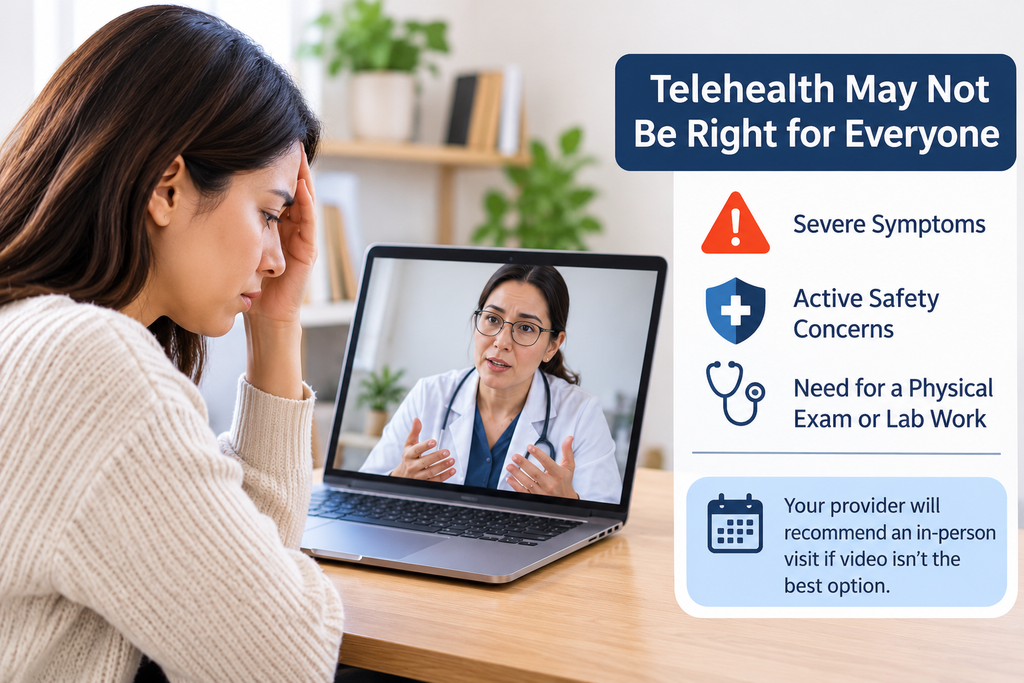
Telehealth is not ideal for everyone. Severe symptoms, active safety concerns, or a need for a physical exam or lab work may call for an in-person visit. Your provider will say so honestly if video is not the right fit.
Signs It May Be Time to Seek Help
Everyone feels anxious sometimes. The difference with an anxiety disorder is that the worry is out of proportion to the situation and does not ease. Stress and anxiety can feel alike at first, but stress usually fades once the pressure is gone, while anxiety tends to linger and spread into other parts of life.
Common Physical and Emotional Symptoms
Anxiety is not only racing thoughts. Many people notice a pounding heart, tight chest, stomach trouble, headaches, or restlessness, along with irritability, dread, or constant “what if” thinking. Sleep often suffers too, and anxiety can cause insomnia, which makes worry harder to manage the next day. Because several of these symptoms overlap with medical conditions, an evaluation helps sort out what is driving them.
When Worry Starts Interfering With Daily Life
Consider an evaluation if worry lasts for weeks, you avoid places or tasks you used to manage, panic attacks are becoming more frequent, or you rely on alcohol to cope. Many people hope anxiety will fade on its own, but when it keeps returning or affects work, sleep, or relationships, professional support is the more reliable path.
Types of Anxiety We Treat Online
Our providers evaluate and treat these conditions by video.
Generalized Anxiety Disorder
Persistent, hard-to-control worry about work, health, or daily life, often with muscle tension, poor sleep, and fatigue lasting six months or more.
Panic Disorder
Sudden surges of intense fear with a racing heart, shortness of breath, or dizziness, followed by ongoing worry about having another attack. Because these symptoms can mimic medical problems, your provider may suggest a physical check with your primary care doctor.
Social Anxiety Disorder
Intense fear of being judged or embarrassed in social or performance situations, which can lead to avoiding meetings, gatherings, or even phone calls.
Specific Phobias
Strong, disproportionate fear of specific things such as flying, heights, needles, or driving, severe enough to interfere with daily routines.

Obsessive-Compulsive Disorder (OCD)
Unwanted, repetitive thoughts and rituals performed to relieve distress. Treatment often combines medication with specialized therapy.
Post-Traumatic Stress Disorder (PTSD)
Lingering anxiety, nightmares, hypervigilance, or avoidance after a traumatic event. Medication management and trauma-focused therapy referrals are common parts of care.
What Happens During Your First Telehealth Visit?
Your first appointment is a conversation, not a test, and it runs longer than follow-ups because your provider needs a full picture.
Before the Appointment
You will typically complete intake forms covering symptoms, medical history, and current medications. Keep a list of everything you take, including supplements, since some can affect anxiety or interact with prescriptions. Find a private spot and test your video and audio.
During the Visit
Your provider will ask when symptoms started, what triggers them, how they affect sleep, work, and relationships, and whether there is any history of substance use or other mental health concerns. Screening questionnaires may help measure severity. Together you will set a plan that may include medication, therapy, lifestyle changes, or a combination.
Can You Get Anxiety Medication Through Telehealth?
Often, yes. Telehealth for anxiety medication follows the same clinical standards as in-person care: a provider evaluates you, confirms a diagnosis, reviews your history, and prescribes only when medication is appropriate.
How Medication Management Works Online
After an evaluation, your provider may recommend a medication, explain how it works, and review possible side effects. Prescriptions go electronically to your pharmacy. Follow-up visits are usually shorter and focus on your response, dose adjustments, and side effects. Many anxiety medications take several weeks to reach full effect, so consistent follow-up matters.
Medications With Extra Rules
Not every medication is handled the same way. Controlled substances, including some fast-acting anxiety medications, face stricter federal and state rules, and an in-person evaluation may be required. Common first-line options, such as SSRIs and SNRIs, are not controlled substances. No responsible provider promises a prescription before an evaluation.

Beyond Medication: Therapy and Daily Habits
Therapy Options
Cognitive behavioral therapy (CBT) is widely used for anxiety, helping you spot unhelpful thought patterns and practice new responses. Gradual exposure is often part of care for phobias and OCD. Your provider can recommend a therapist, and many therapists offer video sessions too.
Daily Habits That Support Treatment
Habits will not replace treatment, but they can help it work. Regular sleep, physical activity, less caffeine, and less alcohol all influence symptoms. Alcohol may feel calming at first but can worsen anxiety and interfere with sleep and some medications. Knowing what causes anxiety, including genetics, life stress, and health factors, also helps explain why these habits matter.
What Follow-Up Care Looks Like
Starting treatment is the beginning, not the finish line. Follow-up visits are where your plan gets refined.
Tracking Your Progress
Your provider will ask how symptoms, sleep, energy, and daily functioning have changed. A simple phone note listing panic episodes, triggers, side effects, and good days makes that conversation more precise. Early on, check-ins are often closer together, then may space out as symptoms steady.
When Treatment Needs Adjusting
Not feeling better after a reasonable period does not mean you are doing something wrong. Dose changes, a different medication, added therapy, or a fresh look at the diagnosis are all possible next steps. If your anxiety is not getting better, bring that question to your next visit. Never stop or change a medication on your own; call the office first, since stopping suddenly can cause problems with some medications.
Telehealth vs. In-Person Visits: Which Is Right for You?
Neither format is better across the board. The right choice depends on your symptoms, comfort level, and logistics.
Reasons to Choose Telehealth
Video visits save travel time, reduce time away from work, and make regular follow-ups easier. They also help people who feel too anxious to leave home, or who want to avoid Las Vegas traffic.
Reasons to Choose an In-Office Visit
Some people prefer face-to-face contact, want vital signs checked, or lack a private, quiet space at home. In-office care can also be the better starting point when symptoms are severe or medication needs closer observation.
Many patients combine both, starting in the office and moving to video for routine check-ins.
Insurance and Costs for Online Psychiatry in Nevada
Mighty Mental Health accepts Nevada Medicaid, CareSource, Silver Summit, Health Plan of Nevada, Molina, and Anthem. Coverage for telehealth visits can vary by plan, so it is worth confirming your benefits before your first appointment.
What Affects Your Cost
Your out-of-pocket cost depends on your plan’s copay and deductible. Medication costs are separate and depend on the prescription and your pharmacy coverage. When you call, ask whether your plan covers telehealth and in-office psychiatry visits the same way and whether prior authorization is needed.

How to Get Started with Telehealth at Mighty Mental Health
Getting started takes a few simple steps.
- Call 702-479-1600 or submit our contact form to request a telehealth appointment.
- Share your insurance information so our team can verify your benefits.
- Complete your intake forms and receive your secure video link.
- Meet with Barbra Scheirer, our Psychiatric Nurse Practitioner, for your evaluation and treatment plan.
If you already see a primary care doctor or therapist, mention it. Coordinating care helps your treatment plan fit together.
When to Seek Urgent Help
Telehealth is not an emergency service. If you are thinking about harming yourself or others, or feel in immediate danger, call or text 988 (Suicide & Crisis Lifeline) or call 911. You can also go to the nearest emergency room. Chest pain, trouble breathing, or symptoms you cannot tell apart from a medical emergency also need urgent in-person care.
Schedule a Telehealth Visit: Call 702-479-1600
Anxiety is treatable, and getting help does not have to mean rearranging your week. Telehealth for anxiety gives you a practical way to start, whether you need a first evaluation, a medication review, or steady follow-up care.
Mighty Mental Health is a psychiatry and medication management office in Las Vegas and Summerlin, NV, offering both telehealth visits and in-office consultations. We accept Nevada Medicaid, CareSource, Silver Summit, Health Plan of Nevada, Molina, and Anthem. Through our Psychiatric Nurse Practitioner, Barbra Scheirer, we build comprehensive treatment plans that may include prescribing medication, recommending therapy, or both, as part of a well-rounded approach to care.
Contact us today at 702-479-1600 or through our contact form to schedule your visit.

Frequently Asked Questions
Is telehealth effective for anxiety?
For most people, yes. Results for common anxiety and mood conditions are generally comparable to in-person care, especially when follow-up visits are consistent.
Can I get anxiety medication prescribed through a telehealth visit?
Often, yes, if your provider determines it is appropriate after an evaluation. Some controlled medications may require an in-person visit under federal or state rules.
Do I need to be in Nevada during the visit?
Generally, yes. Your provider is licensed in Nevada, so you should be physically in the state at the time of the appointment. Tell our team in advance if you will be traveling.
How is a telehealth visit different from an in-person visit?
The clinical conversation is the same. The main differences are location, no in-room vitals, and the convenience of joining from home.
References
- National Institute of Mental Health. Anxiety Disorders.
- American Psychiatric Association. Telepsychiatry.
- U.S. Department of Health and Human Services. Telehealth.HHS.gov.
- U.S. Drug Enforcement Administration, Diversion Control Division. Telemedicine and controlled substance prescribing.
- 988 Suicide & Crisis Lifeline. 988lifeline.org.