

Medically reviewed by Barbra Scheirer,
Psychiatric Mental Health Nurse Practitioner at Mighty Mental Health.
Last medically reviewed: September 15, 2026.
The best treatment for depression and anxiety usually combines therapy, medication, and lifestyle changes tailored to a person’s symptoms and history, not one fixed approach.
If you’ve spent any time searching for answers, you already know there’s no shortage of opinions on what actually works. Some people swear by therapy alone. Others say medication changed their life. The honest answer is less exciting than a single silver bullet: what is the best treatment for depression and anxiety depends heavily on the person asking the question. Two people with the same diagnosis can respond completely differently to the same plan, which is why a good provider treats the individual, not the label on the chart.
This guide walks through the real treatment options available today, how they’re typically combined, and where to find qualified care in Las Vegas if you’re ready to take the next step.
Why the “Best” Treatment Isn’t One-Size-Fits-All
Depression and anxiety don’t show up the same way in every person. Some experience mostly physical symptoms, a racing heart, tight chest, trouble sleeping. Others feel emotionally flat, unmotivated, or stuck in a loop of worry they can’t turn off. Because the presentation varies so much, the “best” treatment is the one that matches your specific symptom pattern, medical history, and daily life.
A college student juggling classes and a part-time job may need something different than a parent managing a demanding career and household. Someone with a family history of anxiety disorders may respond to medication differently than someone whose anxiety started after a specific life event. That’s why an intake conversation with a psychiatric provider matters so much, it’s the foundation the whole treatment plan is built on.
There’s also the question of severity. Mild to moderate symptoms sometimes respond well to therapy and lifestyle adjustments on their own. Moderate to severe symptoms, the kind that interfere with work, relationships, or daily functioning, often need medication in the mix to get symptoms stable enough for therapy to take hold. Neither path is “better” in the abstract; the right one is whichever fits the person in front of the provider.

Types of Treatment for Depression and Anxiety
Therapy-Based Treatments (CBT, Talk Therapy, DBT)
Talk therapy remains one of the most researched and effective tools for both depression and anxiety. Cognitive Behavioral Therapy (CBT) is often recommended first because it directly targets the thought patterns that feed anxious or depressive cycles, the “what if something goes wrong” spirals or the “I’m not good enough” self-talk that keeps symptoms alive.
Dialectical Behavior Therapy (DBT) builds on that foundation with skills for tolerating distress and regulating emotion, especially useful for anxiety that shows up as intense, hard-to-manage reactions. General talk therapy gives people a consistent space to process what’s happening in their lives with someone trained to notice patterns they might miss on their own. It takes time and consistency, but for many people it builds coping skills that outlast the treatment itself.
Medication Management for Depression and Anxiety
Medication isn’t the right fit for everyone, but for people with moderate to severe symptoms, it can be the difference between barely functioning and feeling like themselves again. SSRIs and SNRIs are common first-line options because they’re generally well tolerated and effective for both depression and anxiety, which frequently occur together.
What often gets lost in general advice articles is that medication management isn’t a “prescribe and forget” process. A responsible provider starts low, monitors side effects, checks in on progress, and adjusts as needed. Some people find relief with the first medication tried; others need a few adjustments before landing on the right fit. That process, done carefully with a psychiatric provider, is what makes medication management effective rather than frustrating.
Combination Treatment: Therapy + Medication
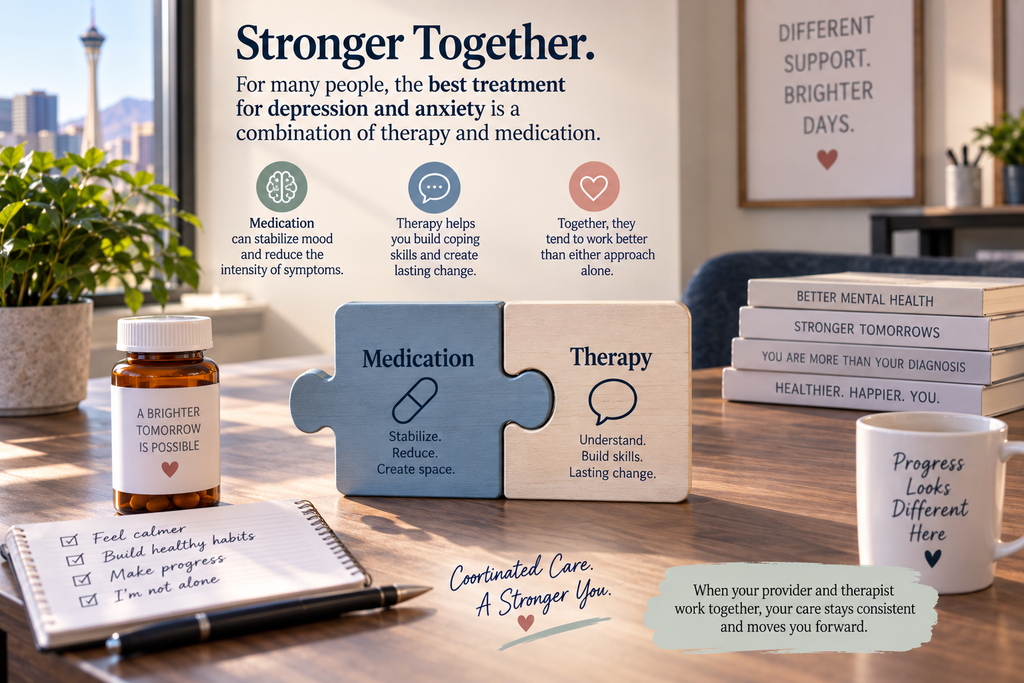
For a lot of people, the honest answer to what is the best treatment for depression and anxiety is both therapy and medication together. Medication can stabilize mood and reduce the intensity of anxious or depressive symptoms enough that therapy becomes more productive. It’s hard to build new coping skills when your brain is stuck in fight-or-flight mode or too depleted to engage.
Research consistently shows combination treatment tends to outperform either approach alone for moderate to severe cases, which is also why collaboration between a prescriber and a therapist matters, when both understand what the other is working on, the plan stays consistent instead of pulling in two directions.
Lifestyle and Complementary Approaches
Clinical treatment works best when it’s supported by daily habits. Regular physical activity has a measurable effect on mood regulation, largely through its impact on stress hormones and sleep quality. Poor sleep and anxiety feed each other in a loop, so improving sleep hygiene is often one of the first practical steps a provider suggests.
Nutrition plays a quieter but real role too; blood sugar swings and nutrient deficiencies can worsen mood symptoms in ways people don’t always connect to what they’re eating. Mindfulness practices, even five minutes of breathing before a stressful meeting, can reduce the physical intensity of anxiety over time. None of these replace therapy or medication when symptoms are significant, but they support whatever clinical plan is already in place.
Best Places for Depression and Anxiety Treatment in Las Vegas
If you’re ready to move from research to actually getting help, here’s a practical starting point for depression and anxiety care in the Las Vegas area.
1. Mighty Mental Health
A Las Vegas and Summerlin-based psychiatry and medication management practice offering in-office and telehealth appointments. The team builds personalized plans that may include medication, therapy referrals, or a combination of both.
2. Aloha Care Therapy — Best for Talk Therapy & Counseling
Focuses on individualized counseling for anxiety and depression, with an emphasis on coping tools alongside emotional support. A solid option for people whose main need is consistent talk therapy.
3. Desert Psychiatry — Best for Psychiatric Medication Management
Offers psychiatric evaluation and medication management for adults managing mood and anxiety disorders, useful for people whose symptoms require closer medical oversight.
4. Nevada Mental Health — Best for Telehealth Access
Provides virtual psychiatric care for patients who prefer or need remote appointments, especially helpful for people balancing work schedules or living outside central Las Vegas.
5. Las Vegas Therapy — Best for Sliding-Scale / Low-Cost Care
Offers lower-cost counseling through a supervised student and intern therapist program, making consistent therapy more financially accessible for people without insurance coverage for mental health services.
Availability, insurance participation, and services can change, so confirm current details directly with each provider before scheduling.
Depression and Anxiety Support in Las Vegas
At the end of the day, there’s no single universal answer to what is the best treatment for depression and anxiety, it’s the one built around your specific symptoms, history, and goals, guided by a provider willing to adjust course as your needs change. That might mean therapy alone, medication alone, a combination of both, or a plan supported by lifestyle changes that reinforce the clinical work you’re already doing.
Mighty Mental Health is a psychiatry and medication management office serving Las Vegas and Summerlin, NV, offering both telehealth visits and in-office consultations. Our Psychiatric Nurse Practitioner, Barbra Scheirer, works closely with each patient to create a comprehensive treatment plan — prescribing medication, recommending therapy, or coordinating both as part of a well-rounded approach to care. We accept Nevada Medicaid, CareSource, Silver Summit, Health Plan of Nevada, Molina, and Anthem, so cost doesn’t have to be a barrier to getting evaluated.
If you’re ready to talk to someone about what treatment could look like for you, contact us today at 702-479-1600 or through our online contact form to schedule an appointment.
Frequently Asked Questions
Is medication or therapy better for depression and anxiety?
Neither is universally “better” — it depends on severity and personal preference. Mild symptoms often respond well to therapy alone, while moderate to severe symptoms frequently benefit from medication, either alone or combined with therapy.
Can depression and anxiety be treated together?
Yes. Depression and anxiety commonly occur together, and treatments like SSRIs, SNRIs, and CBT are effective for both at once, which is why an integrated treatment plan is often more efficient than treating each condition separately.
Do I need a diagnosis before starting treatment?
You don’t need to self-diagnose before reaching out. A formal evaluation from a psychiatric provider confirms what’s actually going on and rules out other contributing factors, like thyroid issues or medication side effects, before a treatment plan is built.
How much does depression and anxiety treatment cost in Las Vegas?
Cost varies by insurance coverage, provider type, and whether you need therapy, medication management, or both. Many Las Vegas practices, including Mighty Mental Health, accept Medicaid and major insurance plans, which can significantly reduce out-of-pocket costs compared to paying privately.
References
- National Institute of Mental Health (NIMH). “Depression.” nimh.nih.gov/health/topics/depression
- National Institute of Mental Health (NIMH). “Anxiety Disorders.” nimh.nih.gov/health/topics/anxiety-disorders
- National Institute of Mental Health (NIMH). “Generalized Anxiety Disorder: What You Need to Know.” nimh.nih.gov/health/publications/generalized-anxiety-disorder-gad