

Medically reviewed by Barbra Scheirer,
PMHNP
Last reviewed: October 08, 2026
Yes, lack of sleep can lead to depression. Chronic sleep loss disrupts mood-regulating brain chemistry, and people with ongoing insomnia face about twice the risk.
Most of us know how a rough night feels: short temper, foggy thinking, and a low mood that lifts after coffee and a decent evening. But when poor sleep stretches into weeks or months, the question changes. Can lack of sleep lead to depression? Research and clinical experience both say yes, and the link runs in both directions. If you’ve been lying awake and wondering whether your mood is connected, you’re asking a reasonable question. Understanding the connection can help you spot trouble early and know when it’s time to ask for professional help.
Can Lack of Sleep Lead to Depression?
Yes. Studies consistently show that people with chronic insomnia are about twice as likely to develop depression as people who sleep well. Sleep loss doesn’t guarantee depression, since genetics, stress, and life events all play a part, but it is one of the most common and most changeable risk factors. That’s why we take sleep complaints seriously during psychiatric evaluations.
Short-term sleep loss vs. chronic insomnia
A few bad nights, like a newborn’s first weeks or a work deadline, usually bring irritability that fades once you catch up. Chronic insomnia, meaning trouble sleeping at least three nights a week for three months or longer, is different. Most adults need seven or more hours a night, and regularly getting less is worth taking seriously. Over time it wears down emotional resilience, and that is when mood symptoms tend to take root.
A two-way relationship
Sleep and mood influence each other. Poor sleep raises the risk of depression, and depression disrupts sleep, which can keep both problems going. Research following people over time has found that insomnia often predicts later depression, not just the reverse. Clinicians see this loop in practice: someone sleeping five hours a night skips exercise, cancels plans, and scrolls late into the evening, and the next night’s sleep gets worse.
How Sleep Deprivation Impacts Mental Health
What happens in the brain
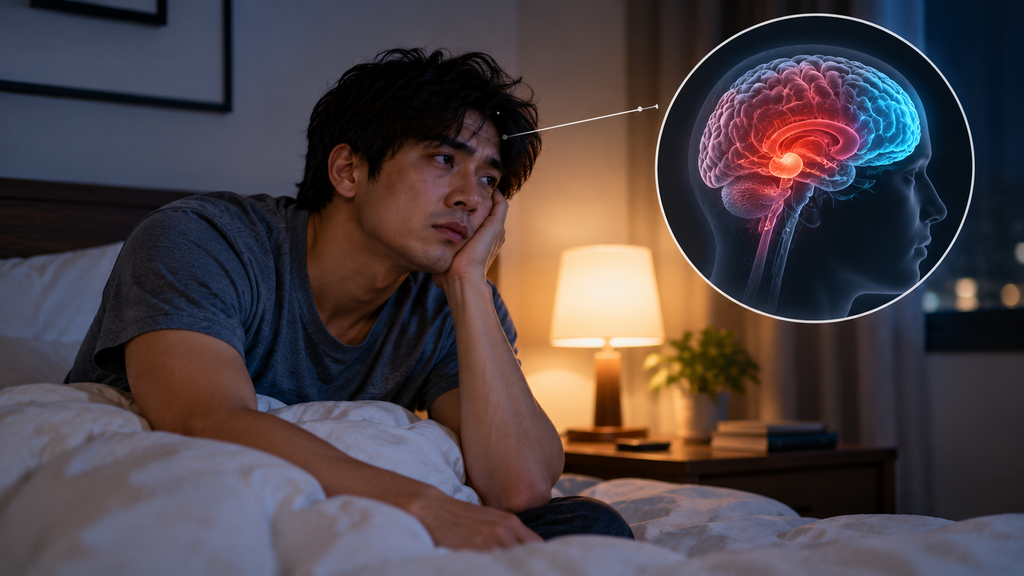
During sleep, your brain processes emotions and resets its stress systems. Without enough of it, the amygdala, which reacts to perceived threats, becomes more reactive, while the prefrontal cortex, which helps regulate emotion, works less effectively. Brain imaging studies show this heightened threat response after just one night of restricted sleep. Sleep loss also disrupts serotonin and dopamine signaling and keeps the stress hormone cortisol elevated. The practical result is that small problems feel bigger and good moments feel flatter.
Effects on thinking and daily behavior
Tired brains struggle with concentration, memory, and decisions. Many people also ruminate more, dwelling on worries that seem manageable after a good night. Behavior shifts too: more caffeine to get through the day, alcohol to wind down, and less motivation for the things that normally lift your mood. Each of these can feed depression. A useful rule of thumb: if your mood is consistently worse on the days after short nights, take note.
Signs Lack of Sleep May Be Affecting Your Mood
Sleep-related mood changes can be subtle at first, and they often show up in your behavior before you name them as sadness.
Emotional signs
- Irritability or a short temper that feels out of character
- Persistent sadness, emptiness, or hopelessness
- Loss of interest in hobbies or people you usually enjoy
- Feeling overwhelmed by ordinary tasks
- Guilt or negative self-talk
Physical and behavioral signs
- Trouble falling asleep, staying asleep, or waking far too early
- Daytime exhaustion despite spending enough hours in bed
- Changes in appetite or weight
- Difficulty concentrating at work or school
- Pulling away from friends and family
Sleep and mood symptoms that last two weeks or longer deserve a professional look, especially if they interfere with work or relationships.
Risk Factors That Make Sleep Loss and Depression More Likely
Lifestyle and environment
Shift work, irregular schedules, heavy caffeine use, evening alcohol, late-night screen time, and ongoing stress all undermine sleep quality. Alcohol, though it can feel relaxing, fragments sleep later in the night. Even small shifts, like a bedtime that moves two hours later on weekends, can add up. Las Vegas adds its own wrinkle, since many residents work overnight hospitality or entertainment shifts that fight the body’s natural rhythm.
Medical and personal factors
A family history of depression, a past depressive episode, anxiety, chronic pain, and untreated sleep apnea all raise the odds. Hormonal changes, such as those after childbirth or during perimenopause, can also disrupt sleep and mood together. Some medications interfere with sleep, which is worth mentioning to your prescriber.

Sleep Problems as a Symptom of Depression
Insomnia and oversleeping
Sleep disturbance is part of how depression is diagnosed. Many people with depression have insomnia, especially waking in the early morning and being unable to fall back asleep. Others sleep far too much and still feel unrefreshed. Both patterns count, so oversleeping shouldn’t be dismissed as laziness. Because the pattern varies so much, a symptom checklist is only a starting point.
Which comes first?
Sometimes insomnia appears months before mood changes, and sometimes depression comes first. Often it is hard to tell, and the answer matters less than treating both. Research suggests that addressing sleep alongside depression can improve outcomes compared with treating depression alone.
How Psychiatric Care Can Help
A thorough evaluation
A psychiatric provider looks at the whole picture: sleep patterns, mood history, medical conditions, medications, substance use, and stress. Providers also ask what a typical night looks like, since bedtime routines and screen use often point to quick wins. Sometimes a sleep study referral is needed to rule out conditions like sleep apnea. This step matters because the right treatment depends on what’s driving the problem.
Treatment options
A plan may combine therapy, medication management, and sleep-focused changes. Cognitive behavioral therapy for insomnia is a well-studied approach, and talk therapy can address depressive thinking. When medication is appropriate, your provider chooses it carefully, since some options are more sedating and others more activating. Simple habits help too: a consistent wake time, morning daylight, limiting caffeine after noon, and a screen-free wind-down. Progress is often gradual, so expect weeks rather than days.
When to get urgent help
If you ever have thoughts of harming yourself, call or text 988, the Suicide & Crisis Lifeline, or go to the nearest emergency room.
Ready to Talk to Someone? Call Mighty Mental Health at 702-479-1600
So, can lack of sleep lead to depression? Yes, and the two often feed each other, which is why treating only one can leave you stuck. Mighty Mental Health is a psychiatry and medication management office in Las Vegas and Summerlin, NV, offering telehealth visits and in-office consultations. As a care provider accepting Nevada Medicaid, CareSource, Silver Summit, Health Plan of Nevada, Molina, and Anthem, we build comprehensive treatment plans for sleep and mood concerns that may include prescribing medication or recommending therapy as part of a well-rounded approach to care, through our Psychiatric Nurse Practitioner, Barbra Scheirer. Contact us today at 702-479-1600 or through our contact form.

Frequently Asked Questions
How many days without sleep can trigger depression?
There’s no exact number. Even a few nights of short sleep can worsen mood and irritability, but depression usually develops from sleep problems that persist for weeks or months, combined with other risk factors. If poor sleep and low mood last two weeks or more, it’s time to get evaluated.
Which comes first, insomnia or depression?
It can go either way. Insomnia often precedes depression and can be a warning sign, while depression commonly causes insomnia. Because they overlap, providers usually evaluate and treat both together.
Can improving sleep help relieve depression symptoms?
Often, yes. Treating insomnia, with approaches such as cognitive behavioral therapy for insomnia, can ease depressive symptoms for many people, especially alongside depression treatment. It isn’t a cure-all, so persistent depression still needs professional care.
When should I see a psychiatrist for sleep problems?
Consider an appointment if sleep problems last more than a few weeks, you’re exhausted despite enough hours in bed, or low mood, anxiety, or loss of interest come with them. Seek help right away if you have thoughts of self-harm.
References
- Baglioni C, et al. Insomnia as a predictor of depression: a meta-analytic evaluation of longitudinal epidemiological studies. Journal of Affective Disorders, 2011.
- Yoo SS, et al. The human emotional brain without sleep: a prefrontal amygdala disconnect. Current Biology, 2007.
- American Academy of Sleep Medicine, Recommended Amount of Sleep for Adults: aasm.org
- National Institute of Mental Health, Depression: nimh.nih.gov
- Centers for Disease Control and Prevention, Sleep and Sleep Disorders: cdc.gov/sleep