
Medically reviewed by Barbra Scheirer,
Psychiatric Mental Health Nurse Practitioner at Mighty Mental Health
Last medically reviewed: September 21, 2026
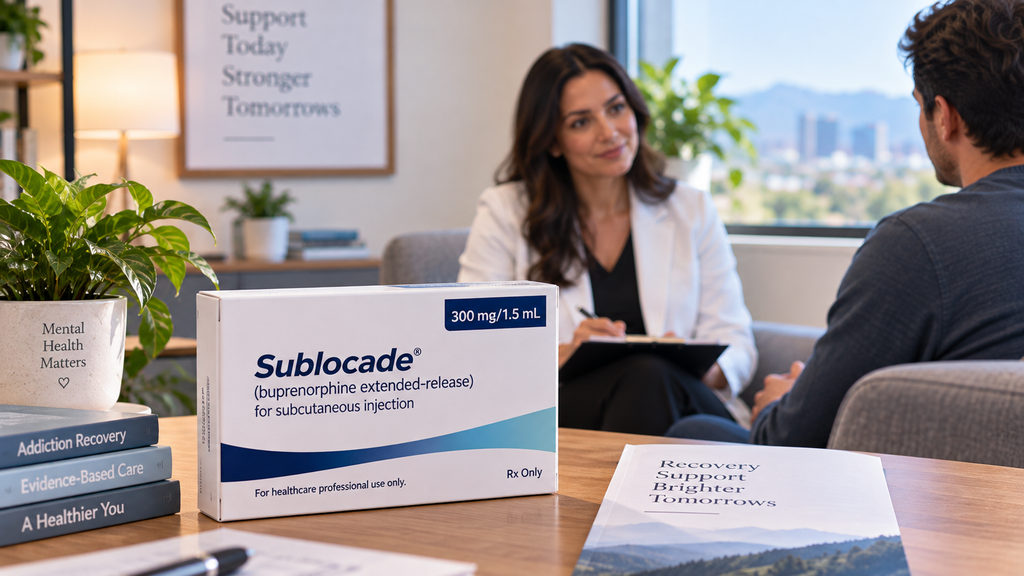
Sublocade is an FDA-approved monthly injection containing buprenorphine, used to treat opioid use disorder in adults already stabilized on buprenorphine treatment.
What Is Sublocade?
If you’ve been researching options for opioid use disorder treatment, you’ve probably come across the question: what is Sublocade? It’s a brand-name, extended-release injectable form of buprenorphine, given once a month by a healthcare provider rather than taken daily like a pill or film. For people managing recovery, that difference in dosing schedule can be meaningful.
Sublocade was approved by the FDA in 2017 as part of a broader effort to make medication for opioid use disorder more convenient and harder to misuse or divert. Unlike sublingual buprenorphine, which dissolves under the tongue every day, Sublocade forms a small gel-like depot under the skin that slowly releases medication over several weeks. For patients who’ve struggled with the routine of daily dosing, that shift alone can change how manageable treatment feels day to day.
How Does the Sublocade Monthly Injection Work?
The Depot Technology
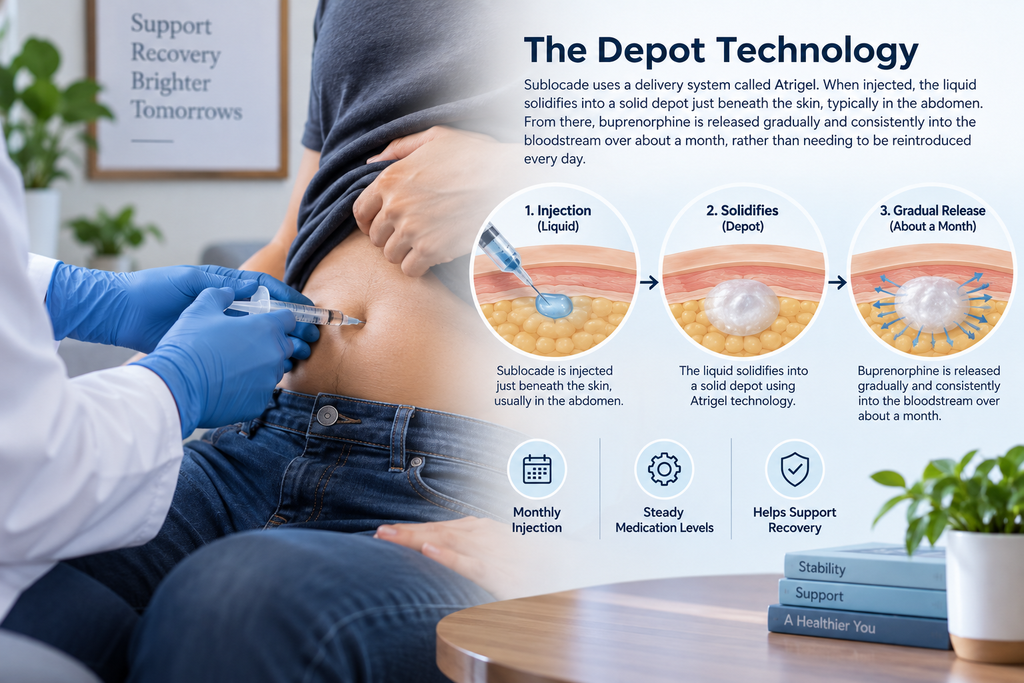
Sublocade uses a delivery system called Atrigel. When injected, the liquid solidifies into a solid depot just beneath the skin, typically in the abdomen. From there, buprenorphine is released gradually and consistently into the bloodstream over about a month, rather than needing to be reintroduced every day.
Why the Slow Release Matters
This steady release helps maintain stable blood levels of buprenorphine, which can reduce cravings and withdrawal symptoms without the peaks and dips that can come with daily dosing. For many patients, that consistency is one of the more noticeable benefits compared to sublingual forms, since it removes the daily decision-making that can sometimes feel like a burden during early recovery.
Who Is Sublocade For?
Patients Already Stabilized on Buprenorphine
Sublocade isn’t typically a starting point for treatment. It’s approved for adults who have already been on a stable dose of sublingual buprenorphine for at least seven days. This initial period allows a provider to confirm the medication is well-tolerated before transitioning to the injection.
People Seeking a More Discreet Routine
Some patients prefer Sublocade because it removes the need for a daily reminder, storage of take-home medication, or visible packaging. A monthly office visit can feel more manageable for people juggling work, family, and recovery at the same time.
What Is in the Sublocade Shot?
Each Sublocade injection contains buprenorphine, a partial opioid agonist, suspended in a biodegradable polymer solution. Once injected, the polymer solidifies and gradually breaks down, releasing the medication in a controlled way. The formulation is designed specifically for subcutaneous injection and isn’t interchangeable with other buprenorphine products.
What to Expect When Starting Sublocade
The Qualification Period
Before starting Sublocade, a provider will confirm you’ve been stable on sublingual buprenorphine for at least a week. This step helps reduce the risk of complications and ensures the transition goes smoothly, since the goal is to build on a treatment approach that’s already working rather than starting from scratch.
The Injection Visit
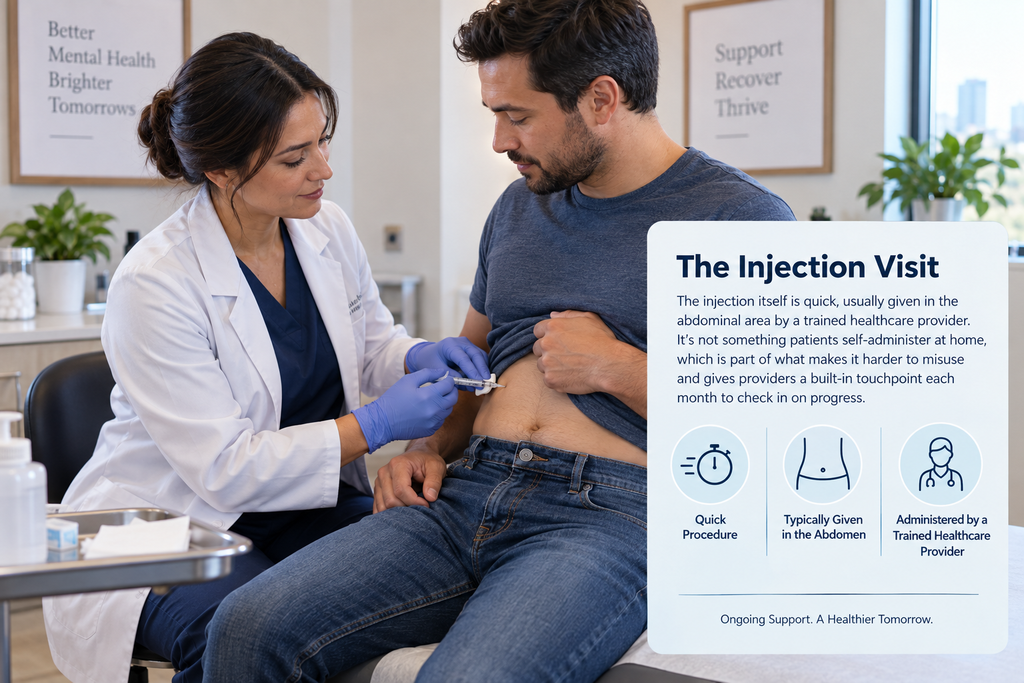
The injection itself is quick, usually given in the abdominal area by a trained healthcare provider. It’s not something patients self-administer at home, which is part of what makes it harder to misuse and gives providers a built-in touchpoint each month to check in on progress.
The First Few Weeks
Some patients notice mild injection-site reactions such as redness, itching, or a small lump, which typically resolve on their own within a few days. Providers usually schedule monthly follow-ups to monitor progress, adjust care as needed, and provide ongoing support, whether that means discussing side effects, reviewing goals, or coordinating with a therapist.
Sublocade vs. Suboxone: What’s the Difference?
Delivery Method
Suboxone is a sublingual film or tablet containing buprenorphine and naloxone, taken daily. Sublocade is an injectable, extended-release form of buprenorphine alone, administered monthly by a provider.
Dosing Frequency and Convenience
Suboxone requires daily attention and storage, while Sublocade reduces that to a single monthly visit. Some patients find this shift supports more consistent treatment adherence, since there’s less room for a missed dose.
Formulation Differences
Suboxone includes naloxone to help deter misuse when a tablet or film is manipulated. Sublocade’s design, a solid depot placed under the skin, serves a similar deterrent purpose through its physical form rather than an added ingredient.
Side Effects and Safety Information
Common Side Effects
Injection-site reactions are the most frequently reported side effect, along with headache, nausea, constipation, and fatigue in some patients. Most side effects are mild and tend to improve over time as the body adjusts to the medication.

Important Safety Considerations
Sublocade carries a boxed warning regarding the risk of serious harm, including death, if it’s administered intravenously rather than subcutaneously, which is why it must be given by a certified healthcare provider in a clinical setting. It’s also only available through a restricted distribution program called the Sublocade REMS Program, which sets requirements for how the medication can be prescribed, dispensed, and administered.
Who Should Use Caution
Patients with certain liver conditions, respiratory issues, or those taking other central nervous system depressants should discuss their full medical history with their provider before starting treatment, since these factors can influence how the medication is tolerated.
Is Sublocade Right for You?
Deciding whether Sublocade fits your recovery plan is a conversation best had with a provider familiar with your history, current treatment, and goals. Factors like your comfort with sublingual buprenorphine, lifestyle, and how you respond to the qualification period all play a role in that decision. What works well for one patient may not be the right fit for another, which is why an individualized evaluation matters more than a general recommendation. A provider can also walk through practical questions, like how monthly visits fit around work or family obligations, before you commit to a treatment path.
Get Started with Sublocade in Las Vegas
Understanding what Sublocade is and how it fits into opioid use disorder treatment is often the first step toward exploring whether it’s a good option for your recovery. Medication is rarely the whole picture, and a thoughtful treatment plan usually combines it with ongoing support.
At Mighty Mental Health, our Psychiatric Nurse Practitioner, Barbra Scheirer, offers comprehensive evaluations for patients considering Sublocade, with care plans that may include medication management, therapy referrals, or both, depending on individual needs. We accept Nevada Medicaid, CareSource, Silver Summit, Health Plan of Nevada, Molina, and Anthem, helping make this type of care more accessible across the Las Vegas and Summerlin area.
As a psychiatry and medication management practice, we offer both telehealth visits and in-office consultations, so you can choose whichever format fits your comfort level and schedule. Contact us today at 702-479-1600 or through our contact form to talk through whether Sublocade could be part of your treatment plan. Book a call now!

Frequently Asked Questions
How long does Sublocade last?
Each injection is designed to release medication steadily over about a month, which is why treatment is scheduled as a once-monthly visit.
Can I get Sublocade right away?
No. Patients typically need to be stabilized on sublingual buprenorphine for at least seven days before starting Sublocade, allowing a provider to confirm tolerability first.
Does insurance cover Sublocade?
Coverage varies by plan. Many insurers, including Medicaid programs, cover Sublocade for eligible patients, but it’s best to confirm specifics with your provider or insurance carrier directly.
Are Suboxone and Sublocade the same thing?
No. Both contain buprenorphine, but Suboxone is a daily sublingual film or tablet that also contains naloxone, while Sublocade is a monthly injectable form of buprenorphine alone.
References
- U.S. Food and Drug Administration. FDA approves first once-monthly buprenorphine injection, a medication-assisted treatment option for opioid use disorder. fda.gov.
- Indivior Inc. Sublocade Prescribing Information. sublocade.com.
- Substance Abuse and Mental Health Services Administration (SAMHSA). Medications for Substance Use Disorders. samhsa.gov.
- National Institute on Drug Abuse. Medications to Treat Opioid Use Disorder. nida.nih.gov.