

Medically reviewed by Barbra Scheirer, Psychiatric Mental Health Nurse Practitioner at Mighty Mental Health
Last medically reviewed: August 4, 2026
To get an accurate mental health diagnosis, schedule a comprehensive evaluation with a licensed mental health professional, share your detailed symptoms, and rule out underlying medical issues.
Navigating emotional, behavioral, or psychological struggles can feel overwhelming when you do not know what is causing them. Whether you are experiencing persistent sadness, debilitating anxiety, sudden mood swings, or trouble focusing on daily tasks, seeking clarity is a courageous and essential first step toward recovery. Knowing how to get a mental health diagnosis gives you a clear roadmap to understanding your brain chemistry, emotional patterns, and behavioral responses.
A formal diagnostic evaluation replaces guesswork with evidence-based clinical insights. Rather than suffering in silence or relying on self-diagnosis from online searches, working alongside a qualified specialist allows you to pinpoint the exact nature of your distress. Receiving an accurate diagnosis is not about applying a permanent label; it is about establishing a therapeutic foundation that enables targeted, effective care.
Why an Accurate Mental Health Diagnosis Matters
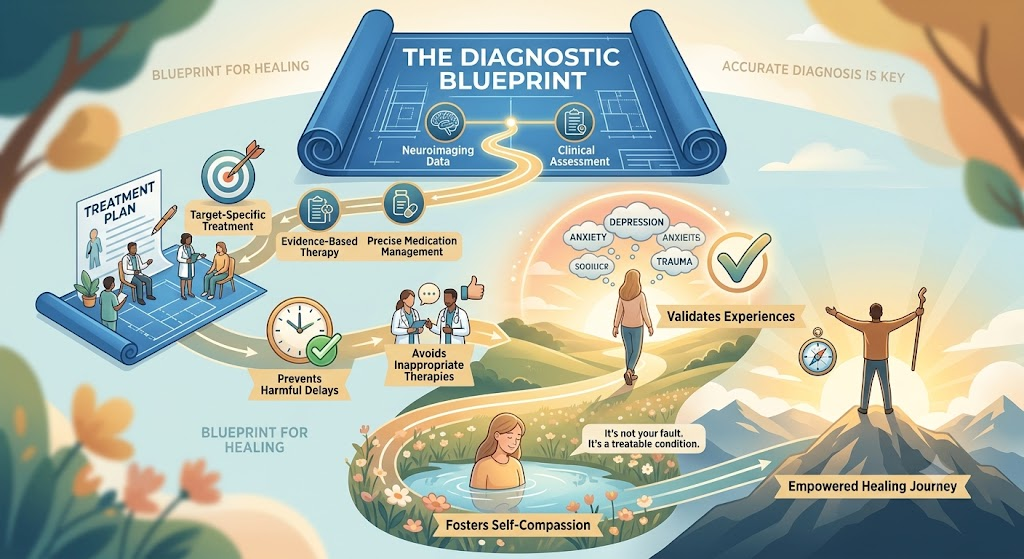
An accurate diagnosis serves as the blueprint for your entire mental healthcare journey. Without a proper clinical assessment, treating psychological distress is like trying to navigate a new city without a map, you may spend significant energy moving in directions that do not lead to genuine relief.
1. Guiding Target-Specific Treatment Plans
Different psychiatric conditions require entirely different intervention strategies. For instance, clinical depression and bipolar disorder can share symptoms like low mood and fatigue, but prescribing a standard antidepressant to someone with unmanaged bipolar disorder can trigger manic episodes. An accurate diagnosis ensures that your treatment plan, whether it includes specialized psychotherapy, targeted medication, or lifestyle modifications, directly addresses the root cause of your symptoms.
2. Preventing Harmful Misinterpretations and Delaying Recovery
When a condition is misdiagnosed or left untreated, individuals often spend months or years trying treatments that yield little benefit. Inappropriate therapies can prolong emotional distress, worsen side effects, or cause unnecessary financial strain. Getting it right the first time protects your physical safety, financial resources, and emotional resilience.
3. Validating Your Experience and Reducing Self-Stigma
Many individuals struggling with undiagnosed conditions internalize their symptoms, blaming themselves for a lack of willpower, laziness, or emotional weakness. Receiving a formal clinical diagnosis validates that your symptoms stem from a legitimate biological, neurological, or psychological condition rather than a personal flaw. This understanding fosters self-compassion and empowers you to actively participate in your healing process.
Who Can Diagnostically Evaluate Mental Health Conditions?
Understanding how to get a mental health diagnosis requires knowing which healthcare providers possess the training, credentialing, and state licensure to conduct diagnostic assessments.
Psychiatrists and Psychiatric Nurse Practitioners
Psychiatrists (MD or DO) and Psychiatric-Mental Health Nurse Practitioners (PMHNP) are advanced medical professionals specializing in mental health. Because they possess extensive clinical training in both physiology and psychiatry, they can perform medical evaluations, order laboratory testing, diagnose complex psychiatric conditions, and prescribe pharmaceutical medications.
Clinical Psychologists
Licensed Clinical Psychologists (PhD or PsyD) specialize in human behavior, cognitive assessment, and psychological testing. They excel at administering comprehensive diagnostic testing batteries for complex conditions such as neurodevelopmental disorders, autism spectrum disorders, and detailed personality assessments. While psychologists diagnose and provide therapy, in most states they do not prescribe medication.
Licensed Therapists and Clinical Social Workers
Licensed Clinical Social Workers (LCSW), Licensed Professional Counselors (LPC), and Licensed Marriage and Family Therapists (LMFT) assess and diagnose emotional and behavioral disorders within psychotherapy settings. They provide continuous counseling and skill-building interventions. However, when medication or medical differential diagnosis is required, they collaborate with psychiatric providers.
Primary Care Physicians
Primary care providers (PCPs) frequently serve as the initial point of contact for mental health concerns. While PCPs can screen for common conditions like mild anxiety or depression and initiate basic care, they often refer complex cases to psychiatric specialists who have dedicated time for exhaustive diagnostic evaluations.

How to Get a Mental Health Diagnosis: A Step-by-Step Guide
Securing a precise evaluation involves a systematic process designed to explore every angle of your mental and physical health.
Step 1: Document Symptoms & Daily Impact
Step 2: Schedule a Specialized Clinical Assessment
Step 3: Undergo Comprehensive Evaluation & Screening
Step 4: Receive Diagnosis & Co-Create a Treatment Plan
Step 1: Document Your Symptoms and Functional Impact
Before meeting a provider, track what you are experiencing over two to four weeks. Note specific emotional changes, sleeping patterns, energy fluctuations, panic episodes, or cognitive difficulties. Document how these symptoms interfere with your job performance, relationships, academic pursuits, or self-care routines.
Step 2: Schedule a Comprehensive Clinical Intake
Reach out to a specialized mental health clinic or psychiatric provider. When booking, specify that you are seeking a complete diagnostic intake evaluation rather than a routine check-up. Verify whether the practice offers in-office consultations or virtual telehealth visits based on your schedule and comfort.
Step 3: Participate in Structured Clinical Interviews and Screenings
During your intake appointment, your clinician will conduct an in-depth diagnostic interview. Expect detailed questions about your personal history, family psychiatric background, trauma history, lifestyle habits, and substance use. Providers may also use standardized diagnostic assessment tools or state-of-the-art diagnostic software (such as computerized testing for ADHD) to gather objective behavioral data.
Step 4: Rule Out Medical Counterparts
A thorough clinician will evaluate physical factors that can mimic psychiatric illness. Your provider may request routine laboratory blood panels to review thyroid function, vitamin D and B12 levels, hormonal balance, or metabolic indicators before finalizing your diagnostic picture.
How to Prepare for Your Diagnostic Appointment
Arriving prepared for your diagnostic intake helps your clinician establish an accurate clinical profile efficiently.
- Gather Your Medical and Psychiatric History: Bring records of past physical diagnoses, surgeries, prior mental health treatments, and hospitalizations.
- Compile a Complete Medication List: Document all current prescription medications, over-the-counter supplements, vitamins, and dosages.
- List Family Health History: Note any blood relatives diagnosed with depression, anxiety, bipolar disorder, addiction, or cognitive disorders.
- Write Down Your Questions: Prepare a list of topics you want to discuss, such as potential treatment approaches, medication management options, or therapist referrals.
- Be Fully Honest: Clinicians evaluate symptoms without judgment. Disclosing substance use, sleep disturbances, or unmanageable stress helps your provider protect your physical safety and tailor an effective strategy.

Why Mental Health Conditions Are Misdiagnosed
Mental health diagnostic procedures require subtle clinical skill because psychiatric conditions do not show up on simple blood scans. Misdiagnoses occur across the healthcare landscape for several recognized reasons:
Overlapping Symptomatic Features
Many mental health disorders manifest through identical clinical symptoms. Fatigue, lack of focus, and irritability appear in major depressive disorder, generalized anxiety disorder, post-traumatic stress disorder (PTSD), and adult ADHD. Without a careful baseline history, one condition can easily be mistaken for another.
Co-Occurring Conditions (Comorbidity)
It is common for individuals to experience more than one mental health condition simultaneously. Someone living with untreated ADHD may develop secondary generalized anxiety or chronic depression due to ongoing frustration. If a practitioner only treats the anxiety symptoms without evaluating underlying executive dysfunction, recovery remains incomplete.
Brief or Hurried Initial Consultations
Accurate psychiatric evaluation demands time. Rushed appointments that focus solely on surface-level complaints frequently lead to incomplete assessments. Thorough evaluations require comprehensive history-taking, structured diagnostic tools, and holistic clinical oversight.
Take Control of Your Mental Well-Being Today
Taking the step to discover how to get a mental health diagnosis is an empowering commitment to your long-term health, clarity, and quality of life. You do not have to struggle through emotional or cognitive challenges alone without expert support.
At Mighty Mental Health, we believe effective, lasting wellness begins with understanding your unique story and providing precise, compassionate diagnostic evaluations. As a premier psychiatry and medication management practice in Las Vegas and Summerlin, NV, our office provides both flexible Telehealth Visits and comfortable In-Office Consultations to meet your personal preferences.
Under the expert leadership of Board-Certified Psychiatric Nurse Practitioner Barbra Scheirer, our team creates comprehensive, personalized care treatment plans tailored specifically to your goals. Depending on your needs, your tailored approach may include prescribing medication management, conducting specialized ADHD testing, or coordinating therapist referrals for a well-rounded, holistic recovery plan.
To ensure quality psychiatric care remains accessible to everyone in our community, Mighty Mental Health accepts major insurance carriers, including Nevada Medicaid, CareSource, Silver Summit, Health Plan of Nevada, Molina, and Anthem.
Take charge of your mental health journey today. Contact Mighty Mental Health by calling our office directly at 702-479-1600 or by reaching out through our online contact form to schedule your initial diagnostic consultation.

Frequently Asked Questions
How long does it take to get an accurate mental health diagnosis?
Initial intake assessments typically last between 50 to 90 minutes, providing enough time to review your immediate symptoms and health history. However, reaching a precise diagnosis may take several visits or weeks of ongoing observation. Complex conditions with overlapping symptoms or secondary physical health factors often require comprehensive psychiatric testing, baseline tracking, and blood laboratory reviews before a definitive diagnosis is confirmed.
Can a primary care doctor give a mental health diagnosis?
Yes, primary care physicians can perform basic mental health screenings and diagnose straightforward conditions like mild-to-moderate depression or generalized anxiety disorder. However, PCPs often lack the specialized psychiatric background and extended session times required to evaluate nuanced conditions like bipolar disorder, complex PTSD, adult ADHD, or treatment-resistant mood disorders. Consulting a specialized psychiatric provider ensures a deeper diagnostic evaluation.
Can medical conditions mimic mental health disorders?
Yes, numerous physical medical issues produce physiological changes that mirror psychiatric disorders. For example, hypothyroidism can cause severe fatigue and depressive symptoms, while hyperthyroidism can trigger rapid heart rate, restlessness, and panic attacks. Similarly, vitamin deficiencies, autoimmune disorders, sleep apnea, and neurological imbalances mimic psychiatric conditions. Thorough clinicians always evaluate physical health alongside psychiatric symptoms.
What should I do if I feel my mental health diagnosis is wrong?
If you feel your current diagnosis does not align with your personal experience, or if your prescribed treatment plan is not providing relief, you have the right to request a second opinion. Schedule a diagnostic consultation with a board-certified psychiatric nurse practitioner or psychiatrist. Bring your symptom log and past treatment records so the clinician can re-evaluate your history with a fresh perspective.
References
- American Psychiatric Association. (2022). Diagnostic and Statistical Manual of Mental Disorders (5th ed., text rev.; DSM-5-TR). Washington, DC: American Psychiatric Association.
- National Institute of Mental Health. (2023). Mental Health Information: Seeking Treatment. U.S. Department of Health and Human Services. Retrieved from https://www.nimh.nih.gov
- Substance Abuse and Mental Health Services Administration. (2024). Screening and Assessment Tools in Mental Health Care. U.S. Department of Health and Human Services.
- World Health Organization. (2022). International Statistical Classification of Diseases and Related Health Problems (11th ed.; ICD-11). Geneva: World Health Organization.