
Medically reviewed by: Barbra Scheirer, Psychiatric Mental Health Nurse Practitioner at Mighty Mental Health
Last medically reviewed: [Insert the date when the article was reviewed or written]
Reading time: Approximately 10–12 minutes
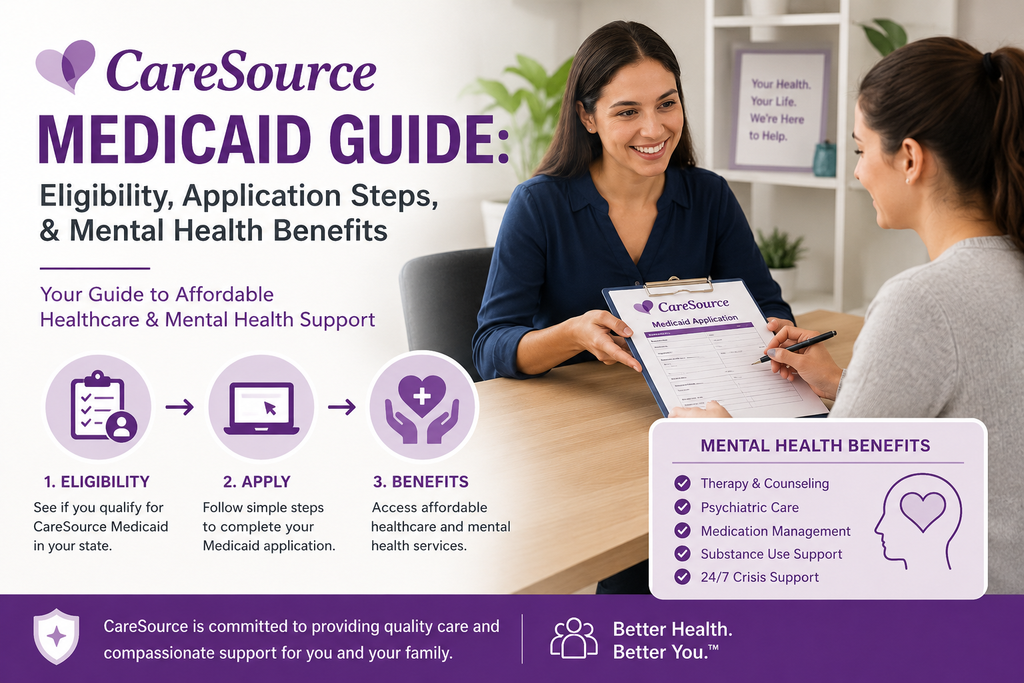
CareSource Medicaid provides eligible individuals with healthcare coverage, including mental health care, therapy, psychiatric evaluations, and medication management.
Understanding how to navigate CareSource Medicaid can help individuals and families gain access to affordable healthcare, including primary care, preventive services, behavioral health support, prescription medications, and specialist visits. For many people, Medicaid serves as a vital safety net, ensuring they can receive necessary medical and psychiatric treatment without overwhelming financial burdens.
Whether you are applying due to low income, job changes, pregnancy, disability, or an urgent mental health need, knowing what to expect can help streamline the process, reduce approval delays, and connect you with qualified providers quickly.
What Is CareSource Medicaid?
CareSource is a nonprofit managed care organization (MCO) that partners with state Medicaid programs to deliver structured healthcare coverage to eligible individuals. Instead of receiving services directly through a state agency, members enroll in a CareSource health plan that coordinates their overall care network, payment processing, and benefit approvals.
CareSource acts as an intermediary connecting members with a broad network of:
- Primary care physicians and specialists
- Psychiatrists and psychiatric mental health nurse practitioners (PMHNPs)
- Licensed therapists, psychologists, and counselors
- Urgent care centers, hospitals, and crisis stabilization facilities
- Community health clinics and pharmacies
Because untreated mental health conditions often impact physical wellness, employment, and quality of life, behavioral health services are a foundational focus within the CareSource network.

Who Is Eligible for CareSource Coverage?
CareSource eligibility is determined primarily through state and federal Medicaid qualification rules. While specific criteria vary by state, standard parameters include:
1. Income-Based Qualification
Most applicants qualify based on household income relative to Federal Poverty Level (FPL) guidelines. Income limits are evaluated annually or when significant household changes occur.
2. Eligible Demographic Groups
CareSource coverage is commonly available to:
- Low-income adults and caregivers
- Children and dependent minors
- Pregnant women
- Seniors meeting specific Medicaid assistance tiers
- Individuals with documented physical or developmental disabilities
3. Residency and Legal Parameters
Applicants must reside in the state where they are applying for CareSource and satisfy federal citizenship or qualified immigration requirements.
4. Special Circumstances
Exceptions and special enrollment pathways exist for individuals who recently experienced job loss, severe medical diagnoses, or transitional housing situations.
What Mental Health Services Does CareSource Cover?
Because Medicaid programs treat mental health care as an essential health benefit, CareSource offers coverage across a full continuum of behavioral healthcare, from routine outpatient care to acute crisis stabilization.
CareSource Covered Mental Health Services
- Diagnostic & Medical Care: Psychiatric evaluations, diagnostic assessments, and ongoing medication management.
- Outpatient Psychotherapy: Individual therapy, group counseling, and family interventions.
- Accessible & Urgent Services: Virtual telehealth consultations and emergency crisis care.
Covered Conditions
CareSource plans cover evidence-based treatment for a wide variety of psychiatric conditions, including:
- Major Depressive Disorder (MDD) and persistent mood disorders
- Generalized Anxiety Disorder (GAD), panic disorder, and OCD
- Attention-Deficit/Hyperactivity Disorder (ADHD)
- Post-Traumatic Stress Disorder (PTSD) and trauma-related conditions
- Bipolar disorder and psychotic disorders
- Substance use disorders (SUD) and dual-diagnosis care
Psychiatric Evaluations and Medication Management
Psychiatric providers conduct clinical assessments to determine accurate diagnoses and establish safe treatment plans. When appropriate, CareSource covers prescribed psychiatric medications, including antidepressants, mood stabilizers, anti-anxiety medications, and non-stimulant or controlled ADHD medications, along with regular follow-up visits to monitor dosage and side effects.
Telehealth Appointments
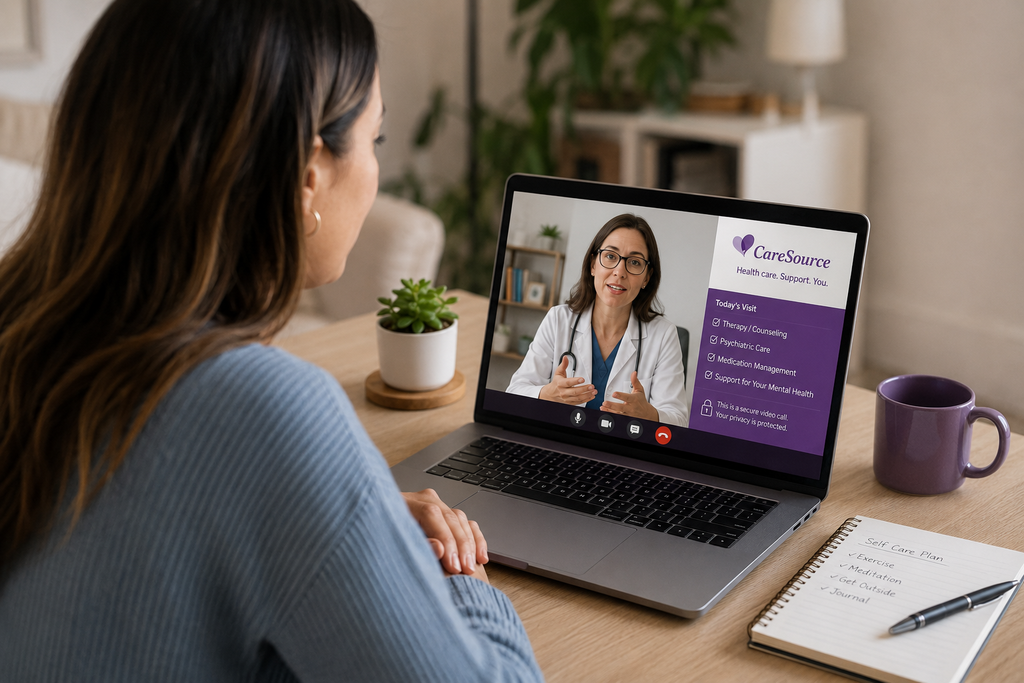
To overcome local transportation obstacles or busy work schedules, CareSource covers secure online video appointments. Telehealth allows members to receive continuous therapy and medication check-ins directly from home.
How to Apply for CareSource Medicaid: Step-by-Step
Navigating the application process becomes straightforward when broken down into logical steps.
Step 1: Confirm Medicaid Eligibility
Utilize your state’s online screening tools to estimate eligibility based on monthly income, family size, and state-specific Medicaid guidelines.
Step 2: Gather Required Documentation
Collect documentation in advance to prevent processing holds:
- Proof of Identity: Driver’s license, state ID, passport, or birth certificate.
- Proof of Residency: Utility bills, lease agreements, or official mail.
- Income Verification: Pay stubs, tax forms (W-2s), benefit award letters, or bank statements.
- Household Details: Information regarding dependents, marital status, and existing health policies.
Step 3: Complete and Submit the Application
Applications can be submitted via:
- State Online Portals: The fastest method for submission and tracking.
- In-Person Offices: Local Department of Health and Human Services centers.
- Phone or Mail: State Medicaid enrollment hotlines or paper mail-in forms.
Step 4: Track Application and Select CareSource
Once submitted, check your application status regularly. Upon receiving your approval notice, formally select CareSource as your designated managed care plan.

Finding a CareSource-Approved Mental Health Provider
After receiving your CareSource enrollment card, the final step is establishing care with an in-network psychiatric professional. You can locate participating providers by:
- Searching the official CareSource online provider directory.
- Requesting a referral from your primary care doctor.
- Contacting specialized psychiatric practices directly to verify their in-network status.
Comprehensive Mental Health Care in Nevada with Mighty Mental Health
Understanding how to qualify and apply for CareSource Medicaid is the first step toward getting high-quality healthcare. If you are located in Nevada and looking for structured psychiatric care, Mighty Mental Health is here to support you.
Based in Las Vegas and Summerlin, NV, Mighty Mental Health is a dedicated psychiatry and medication management practice offering both in-office consultations and secure telehealth visits. We accept Nevada Medicaid and multiple managed care plans, including CareSource, Silver Summit, Health Plan of Nevada, Molina, and Anthem.
Led by experienced Psychiatric Mental Health Nurse Practitioner Barbra Scheirer, our clinic delivers compassionate, evidence-based care tailored to your unique health goals. Services include:
- Comprehensive psychiatric evaluations
- ADHD testing and medication management
- Personalized treatment for depression, anxiety, PTSD, and mood disorders
- Direct coordination with psychotherapists and primary care teams
Take control of your mental wellness today. Contact Mighty Mental Health at 702-479-1600 or submit an inquiry through our online contact form to schedule your appointment.

Frequently Asked Questions
Can I apply for CareSource Medicaid online?
Yes. Most states feature online portals where you can complete, upload supporting documents for, and track your Medicaid application. Online submission is generally the fastest processing route.
Does CareSource cover therapy and psychiatric medication management?
Yes. CareSource covers medically necessary outpatient psychotherapy, diagnostic psychiatric evaluations, and ongoing medication management when provided by in-network clinicians.
What should I do if my CareSource application is delayed?
Application delays are usually caused by missing income or residency verification. Log into your state portal or call your caseworker to confirm whether additional documentation is required.
Do I need a primary care referral to see a psychiatrist with CareSource?
Referral requirements depend on your state’s specific Medicaid guidelines. While some plans allow direct booking with in-network behavioral health specialists, others require an initial referral from a primary care provider.
References
- Centers for Medicare & Medicaid Services (CMS). Medicaid & CHIP Essential Health Benefits Guidelines. Available at: https://www.medicaid.gov
- Substance Abuse and Mental Health Services Administration (SAMHSA). Integrating Behavioral Health into Primary and Managed Care Systems. Available at: https://www.samhsa.gov
- National Association of Social Workers (NASW). Medicaid Managed Care and Access to Mental Health Services. Available at: https://www.socialworkers.org