

Yes, depression can cause extreme fatigue. It’s one of the most common and disabling symptoms, driven by brain chemistry changes, poor sleep, and low energy motivation, not laziness.
If you’ve been dragging through your days, running on empty even after a full night’s sleep, you’re not imagining it. Fatigue is one of the most overlooked symptoms of depression, and it’s often what brings people into a provider’s office long before they connect the dots to their mood. Many people wonder, “can depression cause fatigue,” or worse, “can depression cause extreme fatigue” that makes even small tasks feel impossible. The short answer is yes, and understanding why can help you get the right kind of help instead of just pushing through it.
Can Depression Cause Extreme Fatigue?
Depression is not only a mental health condition; it’s a whole-body experience. Fatigue is listed as one of the core diagnostic symptoms of major depressive disorder, and for many people, it’s the symptom that lingers longest. So yes, depression can cause extreme fatigue, the kind that isn’t fixed by a good night’s rest or a strong cup of coffee.
This type of exhaustion tends to show up as heavy limbs, a foggy mind, and a general sense that even simple decisions take enormous effort. It’s different from being tired after a long week. People living with depression often describe feeling physically weighed down, as though gravity is working against them. This isn’t a character flaw or lack of willpower; it’s a measurable, biological response tied to changes in brain function.
Why Fatigue Often Goes Unrecognized as a Depression Symptom
Because fatigue is so common and has so many possible causes, thyroid issues, anemia, poor sleep habits, or simple overwork, it’s frequently dismissed as unrelated to mental health. This is one reason depression-related fatigue often goes untreated for months or even years before someone seeks help.
Why Depression Makes You Feel Physically Exhausted
Depression affects the brain’s chemistry, particularly neurotransmitters like serotonin, dopamine, and norepinephrine, which regulate mood, motivation, and energy. When these chemical messengers are out of balance, the body’s entire energy system can slow down.
The Brain-Body Connection
Depression is linked to inflammation and changes in the hypothalamic-pituitary-adrenal (HPA) axis, the system responsible for regulating stress hormones like cortisol. Chronic dysregulation of this system can leave the body in a near-constant state of low-grade stress, which is physically draining over time. This helps explain why depression can cause extreme fatigue even in people who otherwise appear to be resting enough.
Sleep Disruption
Depression frequently disrupts sleep architecture, either through insomnia or hypersomnia (sleeping too much). Both patterns reduce the amount of restorative deep sleep a person gets, which leaves the body and brain under-recovered no matter how many hours were spent in bed.
Loss of Motivation and Cognitive Load
Depression also affects motivation and executive function. Tasks that once felt automatic, showering, replying to a text, making dinner, now require conscious effort. This constant mental push-through is exhausting in itself, compounding the physical fatigue already present.

Signs Your Fatigue May Be Linked to Depression
Not all tiredness points to depression, but certain patterns are worth paying attention to. Common signs include:
- Feeling exhausted most of the day, nearly every day, for two weeks or longer
- Needing significantly more sleep than usual, or struggling to sleep at all
- Feeling drained even after rest or a full night’s sleep
- Losing interest in activities you used to enjoy, alongside low energy
- Difficulty concentrating or making decisions due to mental fog
- Physical heaviness in the arms or legs that isn’t explained by exertion
When Fatigue Comes With Other Depression Symptoms
If low energy is paired with a persistently low mood, feelings of hopelessness, changes in appetite, or withdrawal from friends and family, it’s a stronger signal that depression may be the underlying driver rather than a purely physical issue.
Depression Fatigue vs. Normal Tiredness: What’s the Difference
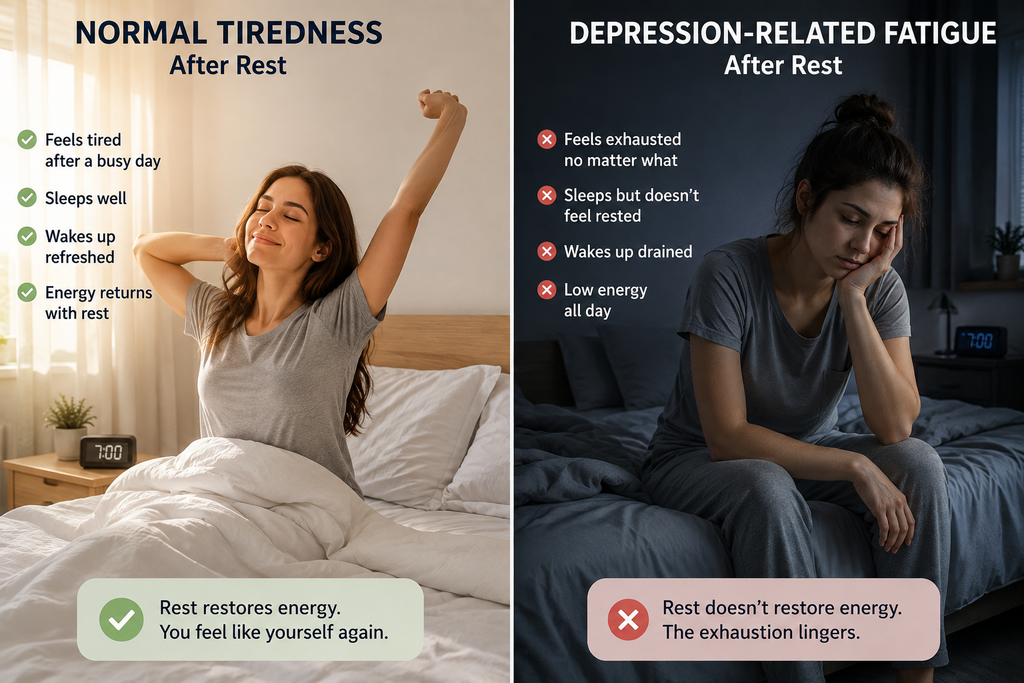
Everyone gets tired. The difference lies in duration, cause, and response to rest.
Normal Tiredness
Ordinary fatigue usually has a clear trigger, a late night, a demanding project, intense exercise, and it typically improves with sleep, hydration, or a day off. Energy tends to bounce back within a short period once the underlying cause is addressed.
Depression-Related Fatigue
Depression fatigue doesn’t follow that pattern. It persists regardless of how much someone sleeps or rests, often lasting for weeks or months. It’s also frequently accompanied by emotional symptoms like sadness, irritability, or a loss of interest in things that used to bring joy. This combination is a key clue that the exhaustion may be tied to mental health rather than simple physical depletion.
Depression Fatigue vs. Chronic Fatigue Syndrome
Because both conditions center on debilitating tiredness, depression and chronic fatigue syndrome (CFS) are sometimes confused with one another, and they can even occur together.
Overlapping Symptoms
Both conditions can cause profound exhaustion, poor concentration, and unrefreshing sleep, which is why an accurate diagnosis matters.
Key Differences
Chronic fatigue syndrome is typically diagnosed when fatigue lasts six months or longer, worsens after physical or mental exertion (known as post-exertional malaise), and occurs without the persistent low mood or loss of interest that defines depression. Depression fatigue, on the other hand, usually improves somewhat as mood symptoms are treated, while CFS fatigue tends to be less responsive to mood-focused treatment alone. A qualified provider can help sort out which condition, or combination of conditions, is at play through a thorough evaluation.
When to Talk to a Provider About Fatigue and Depression
Fatigue that lasts more than two weeks, interferes with work, relationships, or daily responsibilities, or comes with a low mood, hopelessness, or thoughts of self-harm is a signal to reach out for professional support. It’s easy to normalize exhaustion, especially in a culture that often praises “pushing through,” but persistent fatigue tied to depression rarely resolves on its own without proper treatment.
What an Evaluation Typically Involves
A provider will usually ask about sleep patterns, mood history, energy levels, and any physical symptoms, and may recommend bloodwork to rule out other causes like thyroid dysfunction or vitamin deficiencies before confirming that depression is the primary driver.

How Mighty Mental Health Treats Depression-Related Fatigue
If exhaustion has been weighing you down and you suspect depression may be behind it, you don’t have to figure it out alone. At Mighty Mental Health, our team understands the deep connection between depression and physical fatigue, and we build treatment plans around the whole person, not just a checklist of symptoms. Care may include a combination of prescribed medication, ongoing medication management, and referrals to therapy, all tailored to your history and goals. Our Psychiatric Nurse Practitioner, Barbra Scheirer, works closely with patients experiencing depression-related fatigue to identify contributing factors and create a realistic, well-rounded plan for feeling like yourself again.
As a psychiatry and medication management office serving Las Vegas and Summerlin, NV, we offer both telehealth visits and in-office consultations, making care accessible whether you prefer to meet from home or in person. We also accept Nevada Medicaid, CareSource, Silver Summit, Health Plan of Nevada, Molina, and Anthem, so quality mental health care is within reach for more members of our community. If constant exhaustion and low mood have been affecting your daily life, contact us today at 702-479-1600 or through our online contact form to schedule an evaluation.

Frequently Asked Questions
Is fatigue a common symptom of depression?
Yes. Fatigue is one of the most frequently reported symptoms of depression and is included in the clinical criteria used to diagnose major depressive disorder.
Why does depression make you tired even after sleeping?
Depression disrupts the quality of sleep, not just the quantity. Even with enough hours in bed, disrupted deep sleep cycles and altered brain chemistry can leave a person feeling unrested.
Can treating depression improve fatigue?
In many cases, yes. As mood symptoms improve through medication, therapy, or a combination of both, energy levels often improve as well, though it can take time and adjustments to find the right approach.
How long does depression-related fatigue last?
Fatigue can persist as long as the underlying depression remains untreated, sometimes for months or longer. With appropriate treatment, many people notice gradual improvement in both mood and energy over several weeks.